Water Damage Restoration in New Braunfels, TX
Complete water mitigation, moisture mapping, extraction, and structural drying for residential and commercial properties dealing with plumbing failures, appliance leaks, storm intrusion, and hidden moisture throughout New Braunfels and the Central Texas I-35 corridor.
Water damage restoration is the coordinated process of removing unwanted water, extracting trapped moisture from porous building materials, detecting hidden moisture behind walls and under flooring, and drying the structure back to a safe, stable condition. Our New Braunfels team addresses the full scope of water intrusion — not just the visible puddles — so moisture does not linger inside wall cavities, subfloors, or framing.
What Water Damage Restoration Involves
Water damage restoration is broader than simply mopping up a spill or pumping out a flooded room. Once water enters a property in New Braunfels, it follows gravity and capillary action — soaking downward through flooring, wicking laterally into drywall and baseboards, and traveling behind cabinets into concealed wall cavities. A surface that looks dry can still hold enough moisture to weaken structural framing or create conditions for microbial growth over time.
Thorough restoration combines several disciplines: bulk water removal, moisture detection across affected assemblies, controlled evaporation with air movement and dehumidification, evaluation of which materials can be dried versus removed, and a documented drying plan that tracks progress until materials return to an acceptable moisture baseline. Skipping any stage — especially detection and drying — leaves residual moisture that can cause secondary damage long after the visible water is gone.
For New Braunfels homeowners and businesses, the difference between a quick cleanup and a proper restoration often determines whether drywall, hardwood flooring, and cabinetry can be saved or must be replaced. Prompt, complete mitigation reduces both the scope of repairs and the potential for long-term moisture-related issues.
What is the difference between water mitigation and water damage restoration?
Water mitigation is the immediate effort to stop ongoing damage — shutting off the source, extracting standing water, and stabilizing the property. Water damage restoration is the broader process that follows: detecting remaining moisture, drying structural materials, cleaning affected areas, and planning repairs. Mitigation limits the loss; restoration returns the property to its pre-loss condition. Both are part of the same project, and skipping the restoration phase leaves hidden moisture behind.
Call now to check immediate availability for water damage restoration in new braunfels, tx.
Call 830-356-3743Signs and Areas Water Can Affect
Water rarely stays where it first appears. In New Braunfels properties, moisture migrates into porous assemblies and concealed spaces, so identifying every affected area requires inspection beyond the visible wet spots. These are the materials and zones most commonly impacted by water intrusion.
Drywall & Baseboards
Drywall wicks water upward through its paper facing, and baseboards hide moisture that travels along the bottom plate. Discoloration, swelling, or soft spots are common warning signs.
Flooring & Subfloor
Carpet padding, engineered wood, laminate, and the plywood or OSB subfloor beneath all absorb water. Cupping, buckling, or a spongy feel underfoot indicates trapped moisture below the surface.
Wall Cavities & Framing
Water enters wall cavities through gaps around plumbing, baseboards, and electrical boxes. Wood studs and insulation inside the cavity can stay wet long after the wall face appears dry.
Cabinets & Vanities
Kitchen and bathroom cabinets trap water against the wall and floor behind them. Moisture often goes undetected until swelling, odor, or cabinet failure becomes visible.
Ceilings Below Upstairs Leaks
An upstairs plumbing or appliance leak saturates the ceiling below, causing stains, sagging drywall, and water pooling above the ceiling material before it breaks through.
Concrete & Slab
Concrete is porous and holds moisture from slab leaks or flooding. Without detection, moisture can wick back into finished flooring installed over the slab.
Warning signs that point to hidden water damage include musty odors, peeling or bubbling paint, warped trim, discolored ceiling or wall patches, and unexpectedly high indoor humidity. If any of these appear after a known leak — or even without an obvious source — a moisture inspection can locate water before structural damage worsens.
Our Water Damage Restoration Process
Every New Braunfels water damage project follows a structured sequence designed to stop the loss first, then systematically dry and document the structure. The process adapts to the water source, the materials involved, and how far moisture has migrated.
1. Inspection & Moisture Mapping
The property is inspected to identify the water source, safety hazards, and the full boundary of affected materials. Non-invasive moisture meters and thermal imaging map wet areas behind walls and under flooring so nothing is missed.
2. Source Stabilization
If water is still entering, the priority is stopping it — shutting off supply valves, isolating the affected plumbing, or containing the intrusion. Drying cannot succeed while new water keeps arriving.
3. Water Extraction
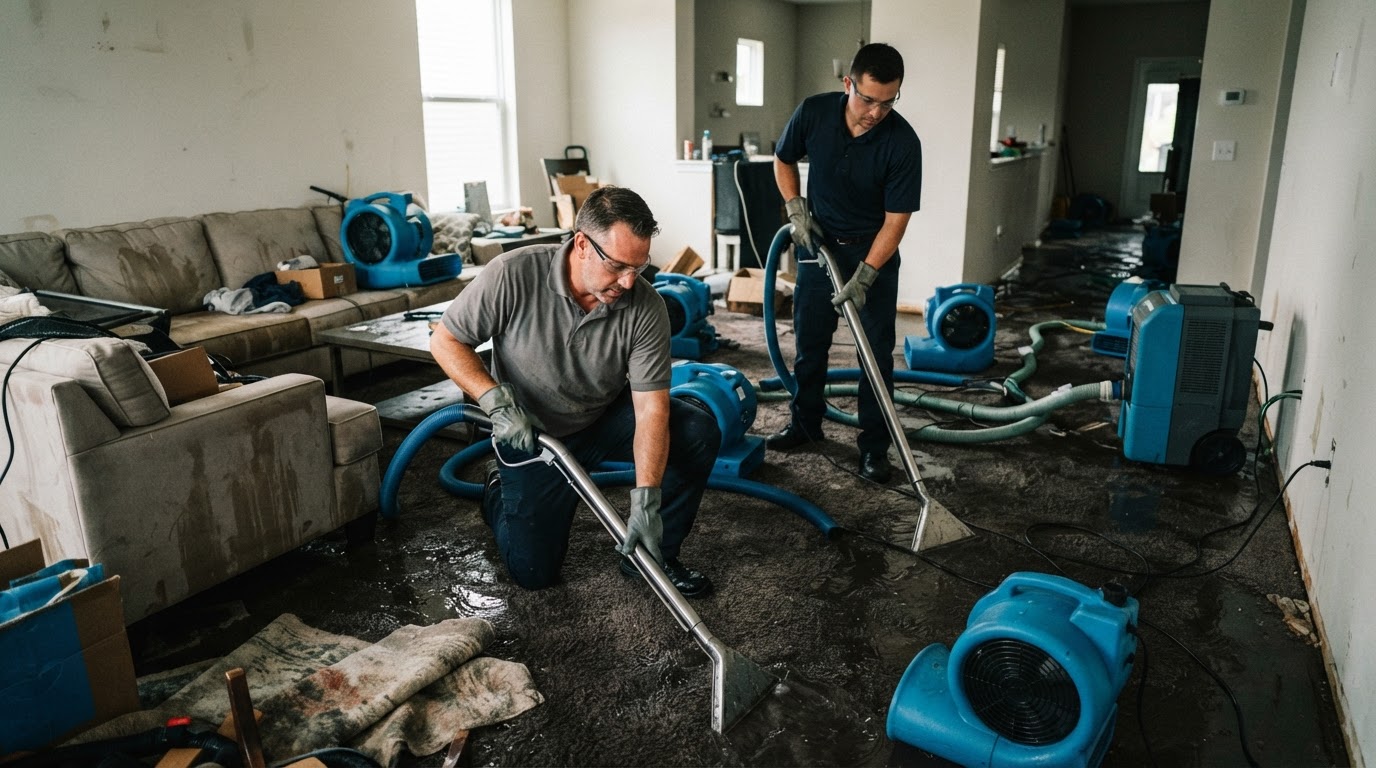
Standing and pooled water is removed with portable extractors and weighted subfloor tools that push water out of carpet and padding. Removing bulk water first dramatically shortens drying time.
4. Affected Material Evaluation
Saturated materials are evaluated for whether they can be dried in place or must be removed. Damaged drywall, delaminated flooring, and contaminated porous materials are identified for controlled removal.
5. Structural Drying & Dehumidification
Air movers create evaporation across wet surfaces while dehumidifiers pull moisture out of the air. Equipment placement targets wall cavities, subfloors, and concealed spaces, not just open rooms.
6. Monitoring & Restoration Planning
Moisture levels are tracked across visits until materials reach dry baseline. Once drying is complete, a restoration plan outlines what can be cleaned, repaired, or replaced to finish the recovery.
Water Removal, Structural Drying & Related Services
Removing visible water is only the first half of restoration. After extraction, significant moisture remains bound inside porous materials — drywall, wood framing, insulation, carpet padding, and the subfloor. Without controlled evaporation and dehumidification, that residual moisture migrates back toward the surface and re-wets materials that appeared dry, extending the damage and increasing the potential for microbial growth.
Structural drying is the controlled process of reducing moisture in building materials after unwanted water has been removed. It depends on the materials involved, the amount of water, the source category, and indoor conditions like temperature and humidity. A room that held an inch of standing water may need several days of drying even after extraction looks complete, because moisture trapped inside assemblies releases slowly.
Because water damage rarely stays within one service category, this page connects to the specialized services below. A burst pipe may require emergency extraction and wall cavity drying; a storm may require flood cleanup and structural drying together. The right combination depends on the source and extent of the loss.
Request water removal assistance for your New Braunfels property.
Water Damage Restoration FAQs
Direct answers to the questions New Braunfels property owners ask most often about the restoration process, drying timelines, and what can be saved.
What is water damage restoration?
Water damage restoration is the full process of removing unwanted water, detecting hidden moisture, drying affected building materials, and planning repairs to return a property to its pre-loss condition. It includes extraction, moisture mapping, structural drying, and material evaluation — not just surface cleanup. The goal is to eliminate moisture from concealed assemblies so it does not cause secondary damage later.
How quickly should water damage be addressed?
Water damage should be addressed as soon as it is safe to do so. Water begins migrating into drywall, flooring, and framing immediately, and porous materials saturate within hours. The faster extraction and drying begin, the more materials can typically be saved and the lower the risk of secondary damage. Contact the team as soon as possible after discovering unwanted water.
Can water hide underneath flooring?
Yes. Water commonly travels beneath hardwood, laminate, tile, and carpet into the padding and subfloor below, even when the floor surface looks only damp. Moisture meters and thermal imaging detect trapped water that a visual inspection misses. Flooring that appears dry can still be saturated underneath, which is why detection is a required step before drying is considered complete.
Can drywall be dried after water damage?
Drywall can often be dried if the water source was clean, saturation is limited, and drying begins promptly. However, drywall that has absorbed contaminated water, shows swelling or crumbling, or stayed wet too long may need to be removed. Affected baseboards and the lower portion of wall material are sometimes opened to allow airflow into the wall cavity during drying.
How long can structural drying take?
Structural drying commonly takes several days, but the timeline depends on the volume of water, the materials affected, how far moisture migrated, and indoor humidity. Some dense materials and subfloors dry more slowly than open wall surfaces. Drying is considered complete only when moisture readings confirm affected materials have returned to an acceptable baseline, not when the room looks dry.
What happens if water reaches a wall cavity?
Water inside a wall cavity wicks into insulation, studs, and the back of the drywall, where it cannot evaporate on its own. Without intervention, that trapped moisture can lead to material damage and microbial growth. Drying a wall cavity typically requires baseboard removal, weep holes or flood cuts to introduce airflow, and monitoring until the framing and cavity are dry.
What types of water damage can be restored?
Most clean and gray water damage — from supply line leaks, appliance failures, and rain intrusion — can be restored through extraction and drying. Contaminated Category 3 water, such as sewage backups, requires removal of affected porous materials and sanitation rather than simple drying. The restoration approach depends on the water source and which materials were affected.
Do you provide water damage restoration outside New Braunfels?
Yes. Water damage restoration assistance is available across New Braunfels and surrounding Central Texas communities along the I-35 corridor, including San Antonio, San Marcos, Seguin, and other nearby service areas. Call now to check immediate availability for your specific location.
Need Water Damage Restoration in New Braunfels?
Call our local team now to check immediate availability for water extraction, moisture mapping, and structural drying across New Braunfels and Central Texas properties.
New Braunfels Water Damage Restoration
830-356-3743