
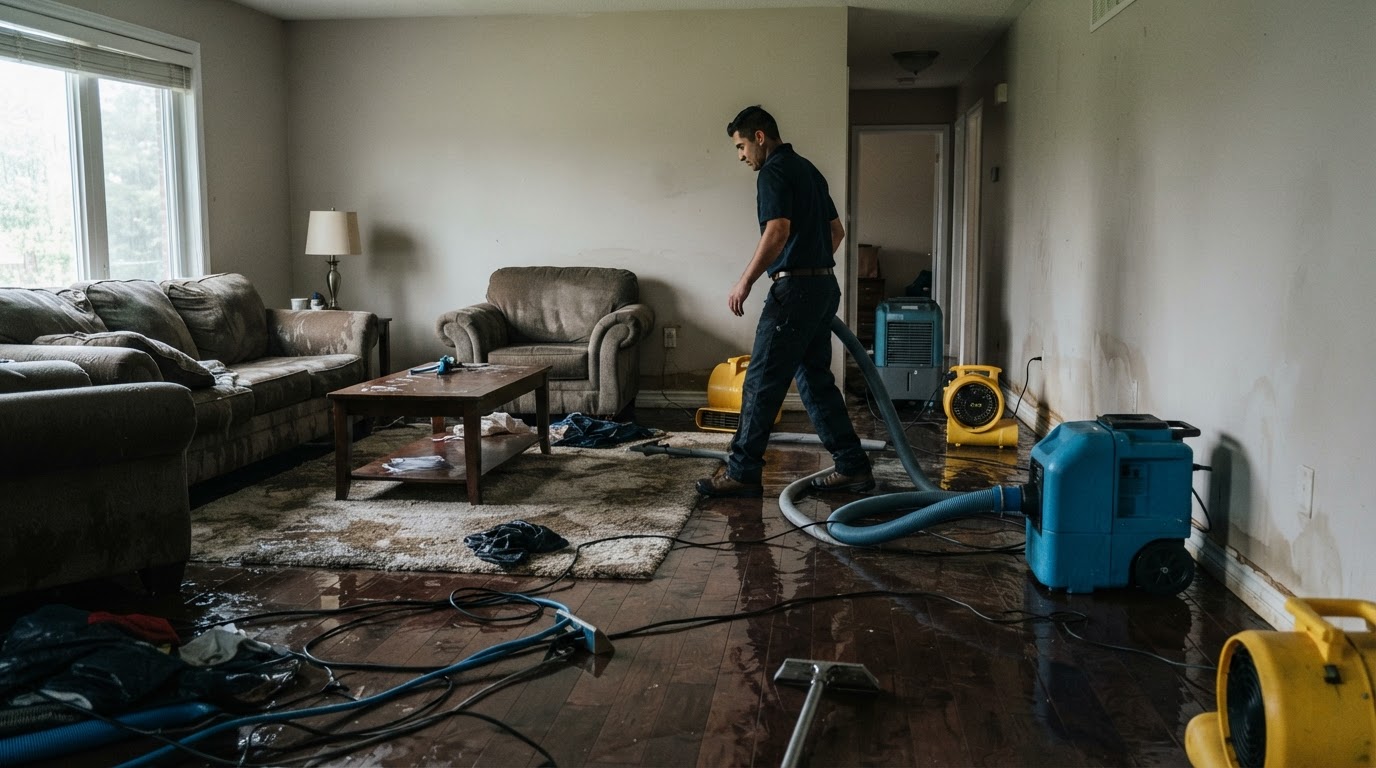
Flood Damage Cleanup in New Braunfels, TX
Comprehensive cleanup for indoor flooding from storm water intrusion, ground water entry, plumbing failures, and overflowing fixtures — addressing saturated flooring, wet drywall, and water migration across New Braunfels and Comal and Guadalupe County properties.
Flood damage cleanup is the removal of water that has entered a property in volume, followed by extraction from saturated materials, evaluation of contamination based on the water source, and structural drying. Not all flooding is the same: a clean plumbing failure, a rainwater intrusion, and contaminated ground water each carry different cleanup considerations. The water source determines whether materials can be dried or must be removed.
Understanding Indoor Flooding in New Braunfels
Indoor flooding in New Braunfels comes from several distinct sources, and the source matters. A pressurized plumbing line that bursts releases clean water rapidly but in a known location. Storm-driven rain entering through a roof or around a door brings outdoor water that may carry debris. Ground water rising through a slab or entering under a wall during heavy rainfall can introduce soil and biological contamination. Each scenario requires a different cleanup approach.
Because flooding often involves a large volume of water spread across multiple rooms, the damage extends well beyond the obvious wet areas. Water migrates under walls into adjacent rooms, travels beneath flooring throughout the affected level, and — in multi-story properties — follows gravity down through ceilings and wall cavities to lower floors. A flood in one room frequently means hidden moisture in the rooms beside and below it.
Cleanup therefore begins with mapping the full extent of the water, not just the room where it pooled. Skipping this step leads to missed moisture that causes odors, material failure, and microbial growth after the visible cleanup appears finished.
What should you do after a room floods?
After a room floods, first avoid electrical hazards by staying out of standing water where outlets or wiring may be energized, then stop the water source if it is safe and identifiable. Move unaffected belongings to a dry area, document the damage with photos, and contact a professional flood cleanup team for extraction and drying. Do not wade into water that may be contaminated from ground entry or a drain backup without knowing the source.
Call now to check immediate availability for flood damage cleanup in new braunfels, tx.
Call 830-356-3743How Flood Water Affects Building Materials
Flood water saturates materials far more deeply than a small leak because of the volume and duration of contact. These are the assemblies most impacted during New Braunfels flood cleanup, and each is evaluated for whether it can be dried or must be removed.
Saturated Flooring
Carpet, padding, laminate, and engineered wood absorb flood water quickly. Padding usually cannot be salvaged, and laminate often delaminates and requires removal. Hardwood may cup and need specialized drying.
Wet Drywall & Walls
Drywall wicks flood water upward, weakening the material and hiding moisture inside the wall cavity. Affected sections are often flood-cut to a safe height to open the cavity for drying and inspection.
Subfloor Damage
Water that reaches the plywood or OSB subfloor can cause swelling, delamination, and warping. The subfloor must be dried and evaluated for structural integrity before new flooring is installed.
Insulation & Cavities
Fiberglass and cellulose insulation inside flooded wall cavities hold water and lose effectiveness. Saturated insulation is typically removed so the cavity can dry and be re-insulated later.
Cabinetry & Trim
Flood water pools behind and beneath cabinets, swelling particleboard components and trapping moisture against the wall. Cabinets are evaluated for whether they can be dried or must be removed.
Contents & Furnishings
Flooded contents — furniture, rugs, and stored items — absorb water and may transfer dyes or contaminants. Salvageable items are moved to a dry area; unsalvageable porous contents are documented for removal.
The water source also affects salvage decisions. Materials saturated by clean plumbing water can often be dried; materials exposed to contaminated ground or drain water may need removal regardless of whether they could technically be dried, because porous materials cannot be reliably sanitized after contamination.
The Flood Damage Cleanup Process
Flood cleanup follows a sequence that prioritizes safety and water removal, then systematically dries the structure. The process adapts to the contamination category and how widely water has spread.
1. Safety & Source Assessment
Electrical hazards are addressed and the flood source is identified. The water category — clean, gray, or contaminated — is determined, because contaminated water changes which materials can be salvaged and requires safety precautions.
2. Containment & Content Removal
Affected contents are moved or protected. Where contamination is a concern, containment practices limit spread. Salvageable items are separated from materials that require disposal.
3. Bulk Water Extraction
Pumps and extractors remove standing flood water from all affected rooms. Weighted tools pull water from carpet and padding, and crevice tools reach beneath cabinets and hard flooring.
4. Material Removal & Flood Cuts
Unsalvageable padding, saturated insulation, and damaged drywall are removed. Flood cuts open wall cavities so the framing inside can be inspected and dried rather than left sealed and wet.
5. Structural Drying
Air movers and dehumidifiers are placed to dry the subfloor, wall framing, and remaining materials. Equipment targets the concealed spaces where flood water migrated, not just open rooms.
6. Cleaning & Restoration Planning
Affected surfaces are cleaned according to the water category. Once drying is verified by moisture readings, a restoration plan outlines repairs, replacement flooring, and reconstruction to finish recovery.
Drying, Contamination & Related Services
Flood cleanup is not finished when the water is pumped out. The volume of water in a flood means deep saturation of subfloors, wall cavities, and framing that requires extended structural drying. Without that drying, residual moisture inside assemblies causes secondary damage — warped flooring, weakened drywall, and conditions favorable to microbial growth — long after the visible water is gone.
The contamination category is equally important. Clean plumbing flood water allows drying and salvage of many materials. Flood water that entered from outside — ground water, storm runoff, or a drain backup — may carry contaminants that require removal of affected porous materials and sanitation of the structure. Assuming all flood water is the same leads to either unnecessary demolition or, worse, leaving contaminated materials in place.
Because flooding overlaps with several specialties, this page connects to related services. Storm-driven flooding may involve roof and ceiling damage; large-volume extraction is supported by dedicated emergency water removal; and the drying phase relies on structural drying expertise.
Request water removal assistance for your New Braunfels property.
Flood Damage Cleanup FAQs
Direct answers about flood water removal, salvage decisions, drying timelines, and how different flood sources are handled.
What should I do after indoor flooding?
First avoid electrical hazards by staying out of standing water near outlets or wiring. Stop the water source if it is safe and known, move unaffected belongings to a dry area, photograph the damage, and contact a professional flood cleanup team for extraction and drying. Do not enter water that may be contaminated from ground or drain sources without knowing its origin.
How is flood water removed?
Flood water is removed with submersible pumps for deeper water and portable extractors for shallow pooling across rooms. Weighted extraction tools pull water from carpet and padding, and crevice tools reach beneath cabinets and hard flooring. The goal is to remove the bulk water quickly so it stops absorbing into subfloors and wall assemblies.
Can flooded carpet be dried?
Carpet can sometimes be dried and reinstalled if the flood water was from a clean source and drying begins promptly. However, the padding beneath almost always cannot be salvaged and is removed. Carpet exposed to contaminated flood water — from ground entry or drain backups — typically cannot be safely saved and is removed along with the padding.
Can drywall survive flooding?
Drywall exposed to clean flood water may be dried if saturation is limited, but drywall that absorbed contaminated water or stayed wet too long is usually removed. In flood cleanup, the lower portion of affected walls is often flood-cut to open the wall cavity so insulation and framing can be inspected and dried rather than left sealed and wet.
What happens if flood water reaches the subfloor?
Water that reaches the plywood or OSB subfloor can cause swelling, delamination, and warping. The subfloor must be thoroughly dried and evaluated for structural integrity before any new flooring is installed. Moisture meters confirm the subfloor has reached an acceptable dry baseline, because flooring installed over a wet subfloor will fail.
How long does a flooded room take to dry?
A flooded room commonly takes several days to dry, but the timeline depends on the volume of water, the materials affected, how far moisture migrated, and indoor humidity. Subfloors and wall framing dry more slowly than open surfaces. Drying is complete only when moisture readings confirm affected materials have returned to an acceptable baseline.
Is storm flooding handled differently from a plumbing leak?
Yes. A clean plumbing leak often allows materials to be dried and salvaged. Storm flooding that brings in outdoor or ground water may carry contamination, which can require removal of affected porous materials and sanitation rather than simple drying. The water source determines the cleanup approach and what can be saved.
Can water remain behind walls after a flood?
Yes. Flood water enters wall cavities through gaps and wicks into insulation and framing, where it cannot evaporate on its own. That is why flood cuts and baseboard removal are used to open cavities for airflow and drying. Moisture detection confirms whether water remains behind walls before drying is considered complete.
Dealing With Indoor Flooding in New Braunfels?
Call now to check immediate availability for flood damage cleanup. Fast extraction and proper drying limit how deeply flood water penetrates your flooring, walls, and subfloor.
New Braunfels Water Damage Restoration
830-356-3743