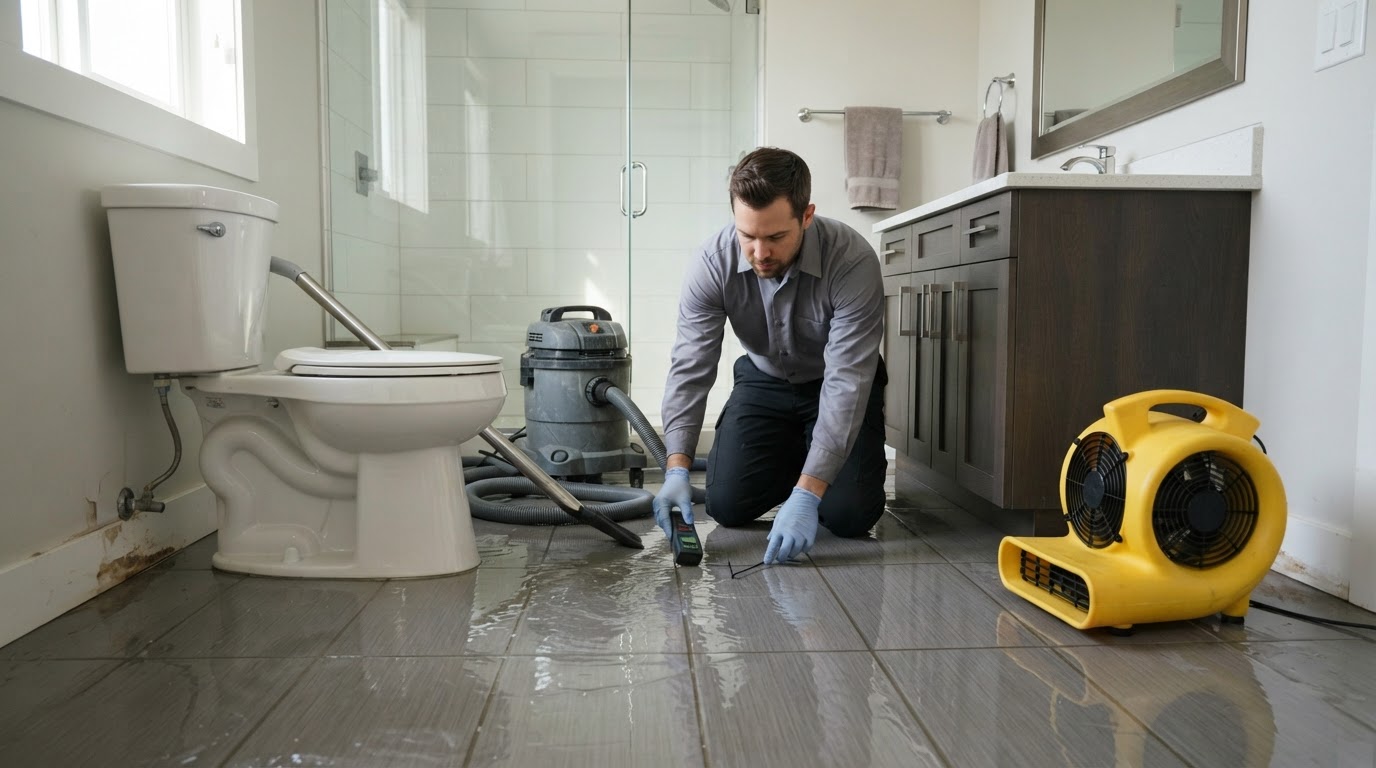
Toilet Overflow, Shower & Bathroom Water Damage Cleanup in New Braunfels
Water extraction and structural drying after a toilet overflow, shower leak, bathtub overflow, or vanity supply line failure — addressing water that has traveled across tile floors, beneath vanity cabinets, into the subfloor, and down through the ceiling of the room below across New Braunfels properties.
Bathroom water damage cleanup is the removal of water released by an overflowing toilet, shower, or bathtub, or a leaking vanity supply line, followed by drying of the subfloor, drywall, and adjacent materials the water has contacted. Bathrooms concentrate a lot of water in a small space with multiple potential sources, and because the water source matters for determining cleanup considerations, a clean fixture overflow is handled differently than a sewage backup. After the leak is stopped, cleanup focuses on extracting the water and drying the materials around the fixture before moisture migrates beneath the tile and into adjacent rooms.
Why Bathrooms Are a Common Source of Water Damage
Bathrooms combine pressurized supply lines, drain lines, and fixtures that can each fail in different ways, all inside a small room finished with tile, drywall, and cabinetry. A toilet overflow releases a large volume in minutes. A shower door leak or curb failure lets water run behind the wall over time. A vanity supply line fitting can burst and spray pressurized water against the cabinet and wall. Each source introduces water differently, which is why the water source determines the cleanup approach.
The water source matters because it changes what the water has contacted and whether contamination is a concern. A clean toilet tank overflow, a bathtub that overflowed from the faucet, and a vanity supply line leak are typically clean water sources. But a toilet bowl overflow containing waste is Category 3 contaminated water and is handled like a sewage backup — with material removal, sanitation, and containment rather than simple drying. When the source is unclear, the safer assumption is contamination.
Bathroom water also travels farther than most homeowners expect. Water on a tile floor flows under the vanity toe kick, beneath the door threshold, and into adjacent hallways or bedrooms. In two-story homes, water from an upstairs bathroom saturates the floor assembly and appears as a stain or sag on the ceiling of the room below. The visible puddle on the bathroom floor is frequently only part of the loss.
What should I do after a toilet overflows?
First, stop the flow if it is safe — turn off the toilet's angle stop valve behind the bowl, and shut off the water supply to any leaking fixture. Avoid contact with the water if the overflow contained waste, and keep people and pets out of the area. Mop or towel up what you can to limit spread, move unaffected items away, and avoid using fans alone, which can spread contamination if the water was dirty. Then contact a water damage cleanup team for extraction and drying, and a plumber if the fixture itself needs repair. If the overflow involved waste, request sewage cleanup rather than standard drying.
Call now to check immediate availability for toilet overflow, shower & bathroom water damage cleanup in new braunfels.
Call 830-356-3743Where Bathroom Water Travels in New Braunfels Homes
Bathroom water damage is deceptive because water moves under tile, behind the vanity, and into adjacent spaces. These are the materials and pathways most commonly affected when a fixture overflows or a supply line fails in a New Braunfels bathroom.
Tile & Subfloor
Water flows across tile and through grout lines or cracked caulk into the underlayment and subfloor below. Tile can mask a saturated subfloor, which must be dried and evaluated before it supports microbial growth beneath the finished floor.
Vanity & Cabinets
A vanity supply line leak sprays water against the cabinet back and base. Particleboard vanity components swell and lose structural integrity, and water pools in the toe kick space and seeps into the adjacent drywall.
Drywall & Baseboards
Water wicks up the lower drywall through capillary action and travels under the baseboard. The wall behind the shower, behind the vanity, and along the door can all hold hidden moisture even when the surface looks only damp.
Adjacent Rooms & Hallways
Water escapes under the bathroom door threshold and into the hallway or adjacent bedroom flooring. What looks like a contained spill commonly extends one room further, reaching the subfloor beneath the adjacent flooring.
Ceiling Below (Upstairs Bath)
In two-story homes, an upstairs bathroom leak saturates the floor assembly and appears on the ceiling of the room below as a stain, sag, or dripping. The lower ceiling and wall cavity require their own drying.
Shower & Tub Surround Walls
A failed shower curb, cracked grout, or damaged waterproofing lets water run behind the tile and into the wall cavity. Hidden moisture behind the surround affects the studs, insulation, and drywall backing.
A useful rule for bathroom leaks: water on the floor rarely stays on the floor. Because the room is small and surrounded by walls with baseboards, water travels outward under the threshold and inward beneath the vanity. Moisture meters confirm how far water has migrated beneath tile and behind the surround before drying equipment is placed.
The Bathroom Water Damage Cleanup Process
Bathroom cleanup follows a sequence adapted to the water source, the fixtures involved, and whether the bathroom is on an upper floor. The process changes based on whether the water is clean or contaminated.
1. Source & Contamination Assessment
The water source is identified and confirmed stopped. If the overflow contained waste or involved a drain line, the area is treated as contaminated and handled with containment and sanitation rather than standard drying.
2. Water Extraction
Standing water is removed from the tile floor, the vanity base, and the shower pan with portable extractors. Weighted tools pull water from beneath the vanity and out from under the threshold before it absorbs deeper.
3. Subfloor & Surround Moisture Detection
Moisture meters and thermal imaging map how far water traveled beneath the tile, behind the shower surround, and — for upstairs bathrooms — into the ceiling and wall cavity of the room below.
4. Material Evaluation
Vanity cabinetry, baseboards, drywall, and flooring are evaluated for drying versus removal. Swollen particleboard, saturated insulation behind the surround, and contaminated porous materials are identified for controlled removal.
5. Structural Drying
Air movers and dehumidifiers dry the subfloor, wall cavities, and ceiling cavity where water migrated. Equipment targets concealed assemblies — under tile, behind the vanity, and in the lower ceiling — not just the open floor.
6. Monitoring & Restoration Planning
Moisture is tracked across visits until the subfloor, drywall, and framing return to an acceptable dry baseline. A restoration plan then outlines any drywall repair, vanity replacement, or tile work needed to finish recovery.
Drying, Contamination & Related Services
The tile floor drying is only one part of a bathroom loss. The harder problem is the water that migrated beneath the tile, behind the vanity, and into the subfloor — moisture that no mop can reach. Without controlled evaporation and dehumidification, that residual moisture stays inside the assemblies and causes warped vanity bases, stained baseboards, and conditions favorable to microbial growth in the weeks after the overflow. A surface that looks dry can still hold enough moisture inside to cause problems later.
The water source determines whether drying is even appropriate. A clean fixture overflow can often be dried and salvaged, with the subfloor and drywall evaluated for whether they can be dried in place or need partial removal. But a toilet overflow containing waste, or a drain line backup, is treated as contamination and follows the sewage cleanup approach — removing porous materials rather than attempting to dry and save them. When the source is unclear, the safer assumption is contamination.
Because bathroom losses often involve fixtures, supply lines, and contamination concerns, this page connects to related services. Sewage backup cleanup handles contaminated overflows, emergency water removal handles the extraction stage, plumbing leak cleanup addresses the broader category of supply line failures, and structural drying completes the project after the water is gone.
Request water removal assistance for your New Braunfels property.
Bathroom Water Damage Cleanup FAQs
Direct answers about toilet overflows, shower leaks, subfloor drying, and how the water source changes the cleanup approach in New Braunfels bathrooms.
What should I do after a toilet overflows?
Stop the flow if it is safe by turning off the toilet's angle stop valve behind the bowl. Avoid contact with the water if the overflow contained waste, keep people and pets out of the area, and mop up what you can to limit spread. Then contact a water damage cleanup team for extraction and drying, and a plumber if the fixture needs repair. If the overflow involved waste, request sewage cleanup rather than standard drying, because contaminated water requires material removal and sanitation.
Is every toilet overflow considered sewage?
No. A clean toilet tank overflow with no waste is typically clean water and can often be dried and salvaged like a standard fixture leak. But a toilet bowl overflow containing waste, or any overflow involving the drain line, is Category 3 contaminated water and is handled as sewage cleanup with containment, material removal, and sanitation. When the source is unclear, the safer assumption is contamination.
Can shower water leak into a wall?
Yes. A failed shower curb, cracked grout, or damaged waterproofing lets water run behind the tile and into the wall cavity, where it affects the studs, insulation, and drywall backing. This type of leak can run for days or weeks before it is visible. Moisture meters and thermal imaging detect hidden moisture behind the surround before drying or repair is planned.
Can bathroom flooding damage the ceiling below?
Yes. In two-story homes, an upstairs bathroom leak saturates the floor assembly and appears on the ceiling of the room below as a stain, sag, or dripping. The lower ceiling and the wall cavity above require their own drying and evaluation, because water that reached the lower ceiling has also traveled through the floor structure between the two rooms.
Can water get underneath tile?
Yes. Water flows across tile and through grout lines, cracked caulk, or failed sealant into the underlayment and subfloor below. Tile can mask a saturated subfloor, because the finished floor looks intact while moisture builds beneath it. Moisture meters confirm whether water remains trapped under the tile before drying is considered complete.
How is bathroom water removed?
Standing water is removed with portable extractors, and water beneath the vanity and under the threshold is reached with weighted and crevice tools that pull it out. The goal is to remove the bulk water quickly so it stops absorbing into the subfloor, drywall, and vanity base before structural drying takes over. Extraction is the first stage; drying the concealed moisture comes after.
Can bathroom drywall be dried?
It depends on the water source and how long it stayed wet. Drywall exposed to clean water and dried promptly can often be saved, with the lower section sometimes opened to allow airflow into the wall cavity. Drywall that stayed wet too long, shows swelling or crumbling, or contacted contaminated water from a drain backup may need to be removed and replaced rather than dried.
What happens if water reaches the vanity cabinets?
Water pools in the vanity toe kick space and soaks the cabinet base and any particleboard components, which swell and lose structural integrity when wet. Affected cabinets are evaluated for whether they can be dried and resealed or must be replaced. The drywall and subfloor behind the vanity are also checked, because a supply line leak often sprays water against the wall behind the cabinet.
Bathroom Water Damage in Your New Braunfels Home?
Call now to check immediate availability for bathroom water extraction, subfloor drying, and ceiling repair — protecting your tile, vanity, and subfloor from hidden moisture across New Braunfels and Central Texas.
New Braunfels Water Damage Restoration
830-356-3743