
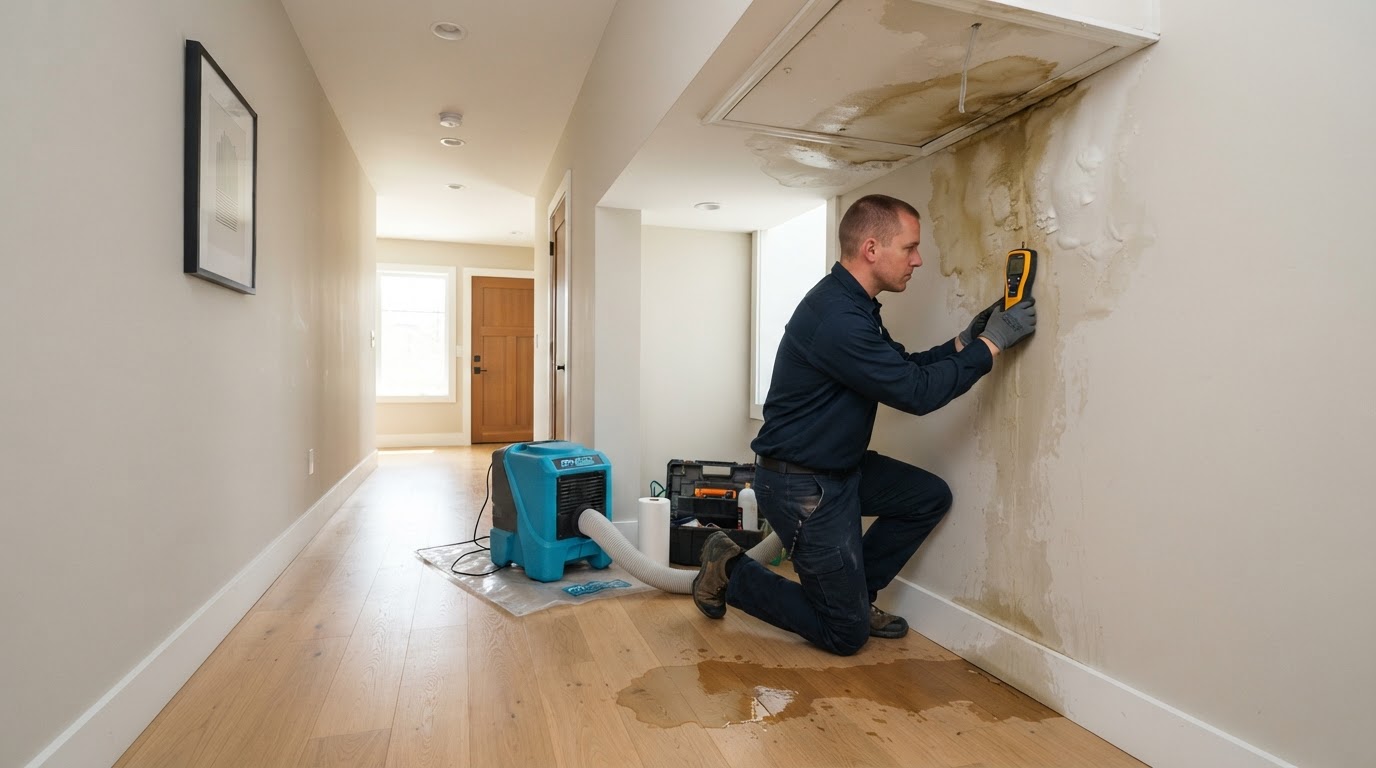
AC/HVAC Condensate Drain & Appliance Leak Cleanup in New Braunfels
Water extraction and structural drying after a clogged AC condensate drain line, overflowing drain pan, or appliance supply line leak — addressing water that has spread from HVAC closets and attic units into ceilings, walls, flooring, and adjacent rooms across New Braunfels properties.
AC and HVAC condensate drain cleanup is the removal of water released by a clogged condensate line, an overflowing drain pan, or an appliance supply line failure, followed by drying of the ceiling, drywall, and flooring the water has contacted. This page addresses the resulting water damage and cleanup — not HVAC repair. After the drain line is cleared or the appliance leak is stopped, cleanup focuses on extracting the water and drying the materials the leak saturated before moisture migrates deeper into the structure.
How Condensate and Appliance Leaks Cause Indoor Water Damage
Air conditioners and HVAC systems pull humidity out of the air and turn it into condensate, which drains through a condensate line to the outside or a drain. When that line clogs with algae, dust, or debris, the drain pan overflows and water runs down the side of the air handler and onto the floor — or, for attic units, through the ceiling below. Because condensate is clean water, the risk is moisture damage to drywall, ceilings, and flooring rather than contamination, but the volume can be significant from a slow, unnoticed leak.
Appliance supply line failures cause similar damage through a different path. A refrigerator ice maker line, a dishwasher connection, or a water softener supply line can develop a slow drip or a full burst. Slow leaks run for days or weeks behind an appliance, soaking the drywall and subfloor behind it before the water is visible. A burst supply line releases a large volume quickly across the floor and into adjacent rooms. Both introduce water into places that are hard to see and harder to dry.
What makes these leaks tricky is that they often start hidden. A clogged condensate line in an attic HVAC closet saturates the ceiling drywall of the room below before it is noticed. A slow refrigerator line leak soaks the wall and subfloor behind the appliance. By the time the damage is visible, water has commonly migrated into the ceiling, wall cavity, or subfloor — which is why moisture detection defines the real scope of the loss before drying is planned.
What should I do if my AC drain line overflows?
First, turn off the HVAC system at the thermostat to stop further condensate production and limit additional overflow. Mop or towel up the visible water to limit spread, and move any unaffected belongings away from the wet area. Avoid using the affected ceiling fixtures if water is dripping from a ceiling — there may be an electrical hazard. Then contact a water damage cleanup team for extraction and drying, and an HVAC technician to clear the clogged condensate line. The cleanup team handles the water damage; the technician handles the equipment. Do not assume the area is dry just because the visible water is gone.
Call now to check immediate availability for ac/hvac condensate drain & appliance leak cleanup in new braunfels.
Call 830-356-3743Where Condensate and Appliance Water Travels
HVAC and appliance leaks are deceptive because the water often starts behind equipment or inside a ceiling and migrates into finished spaces. These are the materials and pathways most commonly affected in New Braunfels homes.
Ceiling Drywall (Attic Units)
An attic HVAC condensate overflow saturates the ceiling drywall of the room below, causing staining, sagging, or dripping. The ceiling cavity and insulation above the drywall hold water and require drying, not just the visible stain.
HVAC Closet Walls & Floor
An indoor air handler in a closet overflows its pan and runs water down the wall and across the closet floor. The drywall behind the unit and the subfloor beneath it absorb moisture that travels outward into the adjacent room.
Drywall Behind Appliances
A slow refrigerator, dishwasher, or water softener line leak soaks the drywall behind the appliance, which is hidden from view. The wall cavity and insulation hold moisture long after the floor looks dry.
Flooring & Subfloor
Water from a condensate overflow or appliance leak spreads across flooring and seeps beneath it into the underlayment and subfloor. Laminate, engineered wood, and carpet padding all absorb water through their seams and edges.
Adjacent Rooms
Water travels under the baseboard and through door thresholds into adjacent rooms. A condensate overflow in a hallway closet can reach the bedroom flooring on the other side of the wall before it is noticed.
Hidden, Slow Leaks
The hardest condensate and appliance leaks to catch are slow ones. A dripping line or a weeping connection can soak the wall cavity and subfloor for weeks, creating hidden moisture that only meters and thermal imaging can detect.
A common pattern: the visible water is only the symptom. The real loss is the moisture that has migrated into the ceiling cavity, behind the appliance, or beneath the flooring. Moisture meters and thermal imaging map the full boundary of affected assemblies before drying equipment is placed, because the visible puddle rarely represents the full scope.
The HVAC Condensate & Appliance Leak Cleanup Process
Cleanup after a condensate or appliance leak follows a sequence that stops the source, removes the water, and dries the structure — including the hidden moisture behind equipment and inside ceiling cavities.
1. Source Confirmation
The condensate line or appliance leak is confirmed stopped — either by the homeowner shutting off the HVAC, or by clearing the clog. The cleanup team addresses the water damage the leak caused, separate from the equipment repair.
2. Water Extraction
Standing water is removed from the floor, the HVAC closet, and around the appliance with portable extractors. Water beneath the air handler and under adjacent flooring is reached with weighted and crevice tools.
3. Moisture Detection
Moisture meters and thermal imaging map how far water migrated into the ceiling drywall, the wall cavity behind the appliance, and the subfloor beneath the flooring. This defines the real scope, which is usually larger than the visible water.
4. Ceiling & Wall Cavity Access
Where moisture is sealed inside a ceiling or wall cavity — common with attic unit overflows — access is created by removing wet ceiling tiles, opening the ceiling drywall, or removing baseboards to introduce airflow into the cavity.
5. Structural Drying
Air movers and dehumidifiers dry the ceiling cavity, wall cavity, and subfloor where water migrated. Equipment targets the concealed assemblies — above the ceiling, behind the appliance, and under the floor — not just the open room.
6. Monitoring & Restoration Planning
Moisture is tracked across visits until the ceiling, walls, and subfloor return to an acceptable dry baseline. A restoration plan then outlines any ceiling drywall repair, flooring replacement, or insulation replacement needed to finish recovery.
Drying, Hidden Moisture & Related Services
The visible water from a condensate overflow or appliance leak is the easy part. The harder problem is the moisture that has migrated into the ceiling cavity, behind the appliance, and beneath the flooring — water that no mop or household fan can reach. Without controlled evaporation and dehumidification, that residual moisture stays inside the assemblies and causes stained ceilings, warped flooring, and conditions favorable to microbial growth in the weeks after the leak. A surface that looks dry can still hold enough moisture inside to cause problems later.
Slow, hidden condensate and appliance leaks are especially important to dry thoroughly because the moisture has been present longer. Extended moisture exposure increases the potential for secondary damage, which is one reason prompt drying matters once the source is stopped. Drying time depends on the materials involved, how much water the leak released, how far it migrated, and how long it ran before it was noticed — so no exact timeline can be guaranteed. The structure is considered dry only when readings confirm affected materials have returned to an acceptable baseline.
Because condensate and appliance leaks often involve ceiling, wall, and hidden moisture, this page connects to related services. Roof, ceiling, and wall hidden water damage cleanup addresses the broader category of concealed moisture, structural drying completes the project after the water is gone, and emergency water removal handles the extraction stage.
Request water removal assistance for your New Braunfels property.
AC & HVAC Condensate Leak Cleanup FAQs
Direct answers about condensate drain overflows, appliance line leaks, ceiling damage, and hidden moisture in New Braunfels properties.
What should I do if my AC drain line overflows?
Turn off the HVAC system at the thermostat to stop further condensate production, mop up the visible water to limit spread, and move unaffected belongings away from the wet area. Avoid ceiling fixtures if water is dripping from above. Then contact a water damage cleanup team for extraction and drying, and an HVAC technician to clear the clogged condensate line. The cleanup team handles the water damage; the technician handles the equipment.
Can an AC condensate leak damage drywall?
Yes. Water from an overflowing drain pan runs down the side of the air handler and soaks the drywall behind and around the unit. The lower drywall wicks water upward through its paper facing, and baseboards hide moisture along the bottom plate. Affected drywall is evaluated for whether it can be dried or whether the lower section must be opened for cavity airflow.
Can HVAC water damage affect the ceiling?
Yes, frequently. An attic HVAC unit with a clogged condensate line overflows its pan and saturates the ceiling drywall of the room below, causing staining, sagging, or dripping. The ceiling cavity and insulation above the drywall hold water and require drying, not just the visible stain on the surface.
Who dries water damage after an AC leak?
A water damage restoration team dries the ceiling, walls, and flooring the condensate leak saturated. An HVAC technician clears the clogged drain or repairs the equipment, but the structural drying is a separate restoration service. After the drain line is cleared, the focus shifts to extracting and drying the property damage the overflow caused.
Can a slow condensate leak cause hidden moisture?
Yes. A dripping condensate line or a weeping appliance connection can soak the wall cavity and subfloor for days or weeks before it is visible. Slow leaks are the hardest to catch because the water stays behind the appliance or inside the wall. Moisture meters and thermal imaging detect hidden moisture that a visual inspection misses, which is why detection defines the real scope of the loss.
How is water beneath HVAC equipment removed?
Standing water is removed with portable extractors, and water beneath the air handler and under adjacent flooring is reached with weighted and crevice tools that pull it out. The goal is to remove the bulk water quickly so it stops absorbing into the drywall and subfloor before structural drying takes over. Extraction is the first stage; drying the concealed moisture comes after.
Does the area need drying after the drain line is cleared?
Yes. After the condensate line is cleared or the appliance leak is stopped, moisture remains inside the ceiling cavity, the drywall behind the equipment, and the subfloor beneath the flooring. Air movers and dehumidifiers evaporate that residual moisture over several visits. Without structural drying, hidden moisture causes stained ceilings, warped flooring, and conditions favorable to microbial growth.
Can appliance leaks spread water into nearby rooms?
Yes. A refrigerator, dishwasher, or water softener line leak releases water that flows under the baseboard and through door thresholds into adjacent rooms. What looks like a contained spill behind one appliance commonly extends into the flooring and subfloor of the next room. Moisture detection confirms how far the water migrated before drying is planned.
HVAC or Appliance Leak in Your New Braunfels Home?
Call now to check immediate availability for condensate drain and appliance leak water extraction, ceiling drying, and hidden moisture detection across New Braunfels and Central Texas.
New Braunfels Water Damage Restoration
830-356-3743