
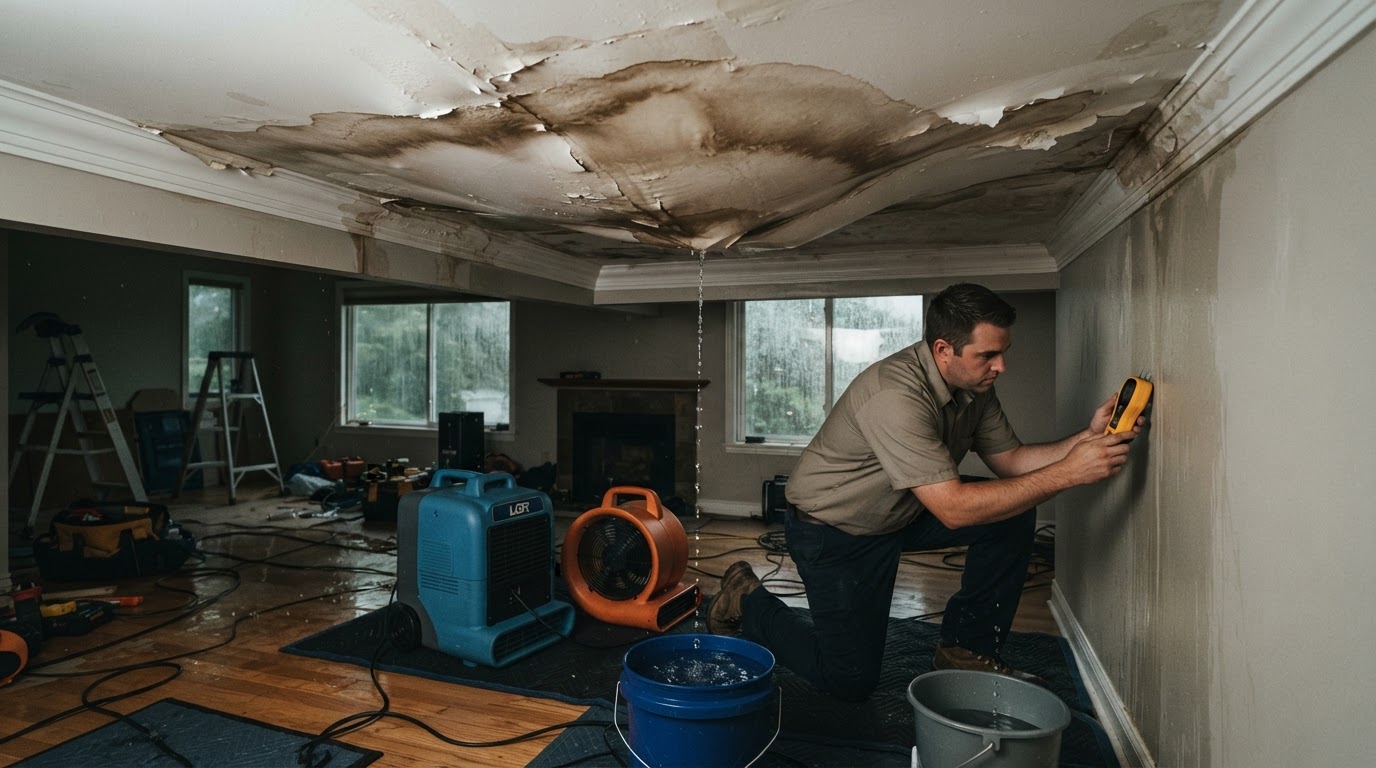
Storm & Heavy Rain Water Damage Restoration in New Braunfels
Restoration for water intrusion from wind-driven rain, roof penetrations, window and door leaks, and heavy rainfall — addressing wet ceilings, attic moisture, wall saturation, and flooring damage across New Braunfels and Central Texas properties.
Storm and heavy rain water damage restoration is the removal of water that entered a property during severe weather, followed by detection of moisture in ceilings, walls, attics, and flooring, and structural drying of the affected assemblies. Rainwater intrusion often follows indirect paths — through a roof leak into an attic, behind siding into a wall cavity, or under a door across flooring — so the visible drip rarely shows the full extent of where water has traveled.
How Heavy Rain Enters a New Braunfels Property
Rain-related water intrusion rarely enters through the obvious path. Wind-driven rain can push water uphill under flashing and behind siding, into wall cavities that show no exterior damage. A roof penetration during a storm may leak into the attic, travel along rafters, and appear as a ceiling stain in a room far from the actual entry point. Water that enters around a door or window often runs behind the trim and into the wall cavity before it reaches the floor.
Because rainwater follows these indirect routes, the visible stain or drip is usually only the exit point — not the source. A ceiling stain may indicate water traveling ten feet along a rafter from a roof leak above a different room. This is why storm damage restoration relies on moisture detection and tracing rather than simply drying the spot where water appears.
Central Texas storms can bring intense rainfall in short periods, overwhelming gutters, drainage, and flashing that handle ordinary rain. The volume of water means intrusion can be significant even from a small opening, and multiple entry points can be active during a single storm. A thorough inspection maps every path water took into the structure.
What should you do after rain enters your home?
After rain enters your home, first contain the water with buckets and towels to protect flooring and belongings, then move furnishings away from the wet area if safe. If water has reached electrical outlets or fixtures, turn off power to that circuit at the breaker. Document the intrusion with photos, note where water appears to be entering, and contact a restoration team for moisture detection and drying — rainwater often travels hidden paths, so the visible drip is rarely the full extent.
Call now to check immediate availability for storm & heavy rain water damage restoration in new braunfels.
Call 830-356-3743Storm Water Paths & Affected Materials
Rainwater intrusion affects a specific set of assemblies based on how it entered. These are the common entry paths and materials involved in New Braunfels storm and heavy rain damage restoration.
Roof Leaks & Attics
Wind-driven rain penetrates roof flashing, vents, and damaged shingles, soaking attic insulation and rafters before appearing as a ceiling stain below. The attic often holds hidden moisture long after the ceiling dries.
Wet Ceilings & Drywall
Ceiling drywall absorbs water from above, staining, sagging, and pooling water on top of the drywall before it breaks through. Sagging ceiling drywall can hold a surprising volume of water above it.
Wall Cavities & Siding
Rain enters behind siding, around windows, and under door flashing, running down inside the wall cavity. Insulation and studs stay wet while the wall face appears dry.
Flooring & Subfloor
Water that enters around doors or windows flows across and beneath flooring into the subfloor. Hardwood cups, laminate warps, and carpet padding saturates from even shallow pooling.
Insulation
Attic and wall insulation that absorbed rainwater loses effectiveness and holds moisture against framing. Wet insulation is evaluated for whether it can be dried or must be removed and replaced.
Contents & Furnishings
Storm water affects furniture, rugs, and stored items in its path. Salvageable contents are moved to a dry area; items exposed to contaminated runoff may require specialized handling.
Warning signs of hidden storm damage include ceiling or wall stains that appear after rain, a musty attic odor, damp insulation, peeling paint near windows or doors, and unexplained humidity. Any of these after a storm warrant a moisture inspection, because the visible damage is often smaller than the hidden moisture behind it.
The Storm & Rain Damage Restoration Process
Storm restoration focuses on tracing where rainwater actually traveled, then drying every assembly it reached. The process adapts to the entry path — roof, wall, or floor — and whether the water carried outdoor contaminants.
1. Intrusion Assessment & Safety
The team identifies where rain entered, addresses electrical hazards in wet areas, and determines whether the water carried outdoor contaminants. Active leaks are contained until the building envelope can be repaired.
2. Moisture Tracing
Thermal imaging and moisture meters trace water from the visible stain back to its entry point — through attics, along rafters, and inside wall cavities — so the full path of migration is mapped before drying.
3. Water Extraction
Standing water from heavy intrusion is extracted, and pooled water above sagging ceilings is carefully drained. Bulk removal protects flooring and limits further saturation of drywall and framing.
4. Wet Material Evaluation
Saturated ceiling drywall, wet insulation, and damaged materials are evaluated for drying versus removal. Insulation that cannot be dried is removed so framing and cavities can dry completely.
5. Structural Drying
Air movers and dehumidifiers target the mapped wet assemblies — attics, ceiling cavities, wall cavities, and subfloors. Equipment placement follows the moisture map, not just the visible stain.
6. Monitoring & Restoration Planning
Moisture is tracked until attics, framing, ceilings, and walls reach dry baseline. A restoration plan then outlines repairs — drywall, insulation, and trim — once the structure is confirmed dry.
Hidden Moisture, Drying & Related Services
The defining challenge of storm damage is hidden moisture. Rainwater enters through one point and travels along structural members to appear somewhere else entirely, leaving wet insulation, framing, and ceiling cavities that show no visible sign of damage. Without detection and targeted drying, that hidden moisture causes ceiling sagging, weakened framing, and conditions favorable to microbial growth long after the storm passes.
Attic moisture deserves particular attention. Insulation that absorbed rainwater holds water against the ceiling drywall below and the roof framing above, and it does not dry quickly on its own. Wet insulation is often removed rather than dried, both to speed drying of the framing and because insulation loses effectiveness once saturated. The attic must be confirmed dry before new insulation is installed.
Because storm damage overlaps with several specialties, this page connects to related services. Large storm intrusion may require flood cleanup; roof and ceiling damage shares expertise with the hidden water damage page; and the drying phase relies on structural drying.
Request water removal assistance for your New Braunfels property.
Storm & Heavy Rain Water Damage FAQs
Direct answers about rainwater intrusion, hidden moisture, ceiling and attic damage, and drying after storms.
What should I do after rain enters my home?
Contain the water with buckets and towels to protect flooring, move furnishings away from the wet area, and turn off power to wet circuits at the breaker. Document the intrusion with photos and note where water appears to enter. Then contact a restoration team for moisture detection and drying, because rainwater often travels hidden paths and the visible drip is rarely the full extent of the damage.
Can heavy rain cause hidden wall moisture?
Yes. Wind-driven rain enters behind siding, around windows, and under door flashing, then runs down inside the wall cavity where it saturates insulation and studs. The wall face can appear completely dry while the cavity holds significant moisture. Thermal imaging and moisture meters detect this hidden water, which cannot dry without cavity access.
What happens when rain enters through a roof leak?
Rainwater from a roof leak soaks attic insulation and rafters, then travels along structural members until it appears as a ceiling stain — often in a room far from the actual entry point. The attic and ceiling cavity hold hidden moisture long after the visible stain dries. Drying requires tracing the water back to its entry point and drying the attic and framing, not just the ceiling surface.
Can storm-damaged drywall be dried?
Storm-damaged drywall can sometimes be dried if saturation is limited and the water source was clean rainwater. However, drywall that is sagging, crumbling, or stayed wet too long may need to be removed. Ceiling drywall that pooled water above it is often removed both to drain the water and to allow the ceiling cavity and framing to dry.
How is rainwater removed from flooring?
Rainwater on flooring is removed with extractors, and weighted tools pull water from carpet and padding. Water that seeped beneath hard flooring into the underlayment and subfloor may require lifting the flooring to access. Moisture meters confirm whether water remains trapped beneath the surface before drying is considered complete.
Does storm water require structural drying?
Yes. After visible water is removed, moisture remains inside ceiling cavities, wall cavities, attics, and subfloors that extraction cannot reach. Structural drying with air movers and dehumidifiers evaporates that residual moisture. Without it, hidden moisture causes ceiling sagging, weakened framing, and conditions favorable to microbial growth.
How can moisture spread after a roof leak?
Moisture from a roof leak spreads along rafters and the underside of the roof deck, soaking insulation and traveling horizontally before dripping onto the ceiling below. The visible ceiling stain may be far from the actual roof entry point. Water also runs down wall cavities from the attic, affecting framing and insulation on lower levels.
When should wet insulation be evaluated?
Wet insulation should be evaluated as soon as storm damage is discovered, because it holds moisture against framing and ceiling drywall and does not dry quickly on its own. Saturated insulation is often removed to allow the framing and cavity to dry and because it loses effectiveness once wet. The attic must be confirmed dry before new insulation is installed.
Storm or Rain Damage in Your New Braunfels Property?
Call now to check immediate availability for storm water extraction, moisture tracing, and structural drying. Rainwater travels hidden paths — detection finds moisture the visible stain doesn't show.
New Braunfels Water Damage Restoration
830-356-3743