Sewage Backup & Black Water Cleanup in New Braunfels
Safe, containment-focused cleanup for sewage backups, drain line backups, and Category 3 black water intrusions — emphasizing controlled removal of contaminated materials, sanitation, and structural drying across New Braunfels properties.
Sewage backup cleanup is the safe removal of Category 3 contaminated water and the porous materials it has contacted, followed by sanitation of affected surfaces and drying of the remaining structure. Black water from a sewer or drain backup carries biological hazards, so cleanup prioritizes avoiding exposure, containing the affected area, and removing materials that cannot be reliably sanitized rather than attempting to dry and save them.
Why Sewage Water Requires Specialized Cleanup
Sewage backups and drain line failures introduce Category 3 water — the most contaminated classification — into a property. Unlike a clean supply line leak, black water carries biological contaminants from waste and drain lines. This changes the cleanup approach fundamentally: the priority shifts from drying and salvage to safe removal, sanitation, and protecting unaffected areas of the property from cross-contamination.
A key principle is that porous materials saturated with black water generally cannot be reliably saved. Carpet, padding, drywall, insulation, and particleboard cabinetry that have absorbed contaminated water are removed rather than dried, because sanitizing the surface does not address contamination that has penetrated the material. Attempting to dry and save these materials risks leaving biological hazards behind.
Cleanup also requires safety precautions. Direct contact with sewage water should be avoided, and the affected area is contained to limit the spread of contaminants to adjacent rooms and the HVAC system. This is not a scenario for standard wet-vac cleanup — it requires controlled, safety-focused remediation.
Is sewage backup water safe to clean up yourself?
No. Sewage backup water is Category 3 black water that carries biological hazards, and direct contact should be avoided. Porous materials saturated by sewage generally cannot be safely salvaged and require professional removal, and the affected area needs containment and sanitation to prevent cross-contamination. Avoid walking through sewage-contaminated water, keep people and pets away from the area, and contact a professional cleanup team rather than attempting DIY remediation.
Call now to check immediate availability for sewage backup & black water cleanup in new braunfels.
Call 830-356-3743Sources, Signs & Materials Affected by Sewage
Sewage and drain backups originate from several points in a property's waste system, and the affected materials are evaluated for removal based on their porosity and the extent of contamination. These are the common sources and materials involved in New Braunfels black water cleanup.
Main Sewer Backups
A blockage or overload in the main sewer or city line forces waste water back through floor drains, toilets, and tubs, often affecting the lowest level of the property first.
Toilet Overflows & Wax Ring Failures
A clogged or overflowing toilet, or a failed wax ring seal, releases contaminated water across the bathroom floor and beneath fixtures into the subfloor.
Drain Line Backups
Interior drain line blockages cause sinks, tubs, and floor drains to back up, pushing contaminated water across floors and into adjacent rooms.
Porous Materials (Removed)
Carpet, padding, saturated drywall, insulation, and particleboard cabinets that contacted black water are removed because they cannot be reliably sanitized after contamination.
Semi-Porous Surfaces (Sanitized)
Concrete, tile, sealed wood framing, and metal or plastic components can often be cleaned and sanitized, then dried, after contaminated materials are removed.
Hidden Subfloor Moisture
After contaminated flooring is removed, the subfloor beneath is inspected and sanitized, then dried. Moisture meters confirm the subfloor is dry before reconstruction.
Warning signs of a developing backup include gurgling drains, slow fixture drainage, sewage odor, and water rising in floor drains or lower-level fixtures. If multiple drains back up simultaneously, the issue is likely in the main line and requires both plumbing attention and contaminated water cleanup.
The Sewage & Black Water Cleanup Process
Black water cleanup follows a safety-first sequence: contain the area, remove contaminated water and materials, sanitize the structure, then dry what remains. The process is deliberately more controlled than clean-water cleanup.
1. Safety & Containment
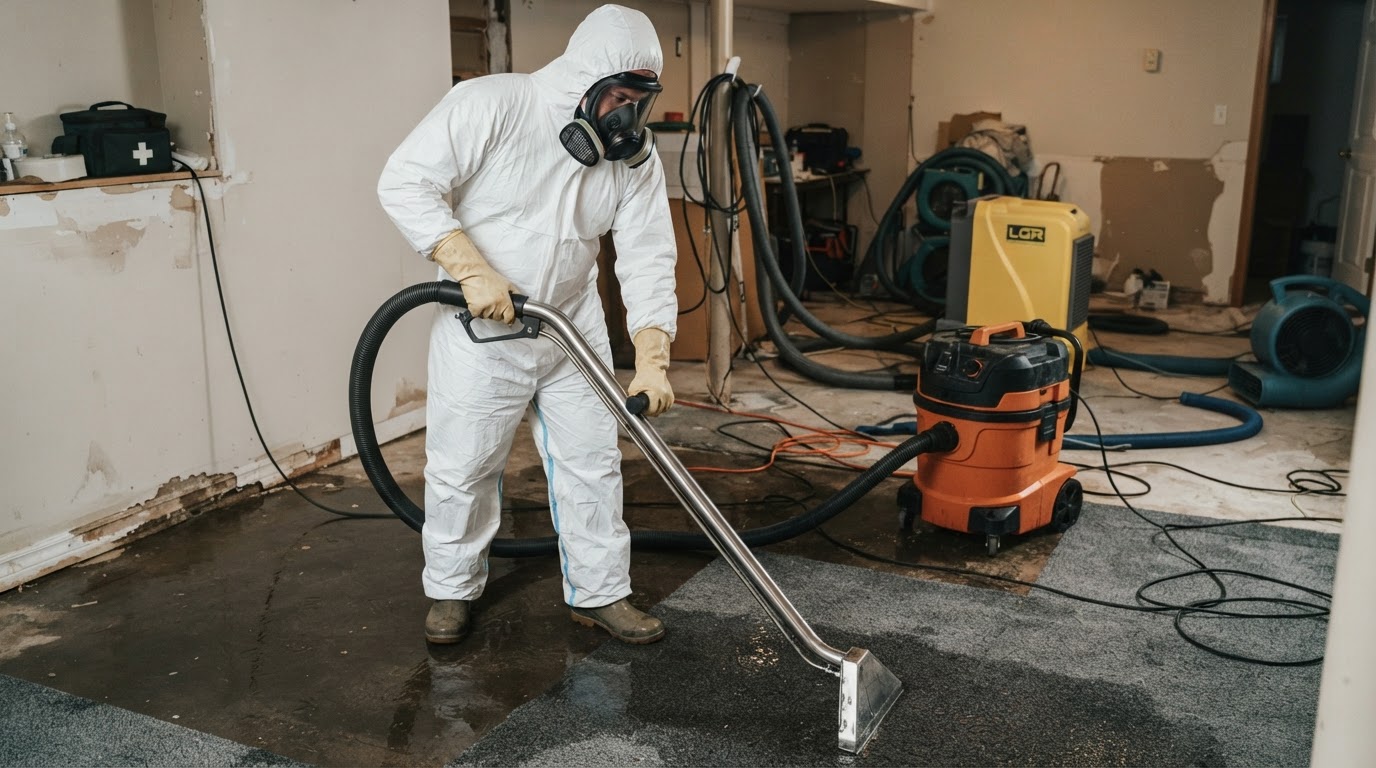
Technicians use appropriate personal protective equipment and establish containment of the affected area to prevent contaminants from spreading to unaffected rooms and the HVAC system.
2. Contaminated Water Extraction
Black water is extracted using dedicated equipment. Standing contaminated water is removed first to limit the area of contact and begin reducing exposure.
3. Removal of Porous Materials
Carpet, padding, saturated drywall, insulation, and contaminated cabinetry are removed and disposed of appropriately. These materials cannot be reliably sanitized and are not candidates for drying.
4. Sanitation of Affected Surfaces
Remaining semi-porous surfaces — concrete, tile, framing, and structural components — are cleaned and treated with antimicrobial products according to the contamination level.
5. Structural Drying
Once contaminated materials are removed and surfaces sanitized, the subfloor and remaining framing are dried with air movers and dehumidifiers until moisture readings confirm a dry baseline.
6. Verification & Restoration Planning
The area is inspected to confirm contamination has been addressed and the structure is dry. A restoration plan then outlines reconstruction — new drywall, flooring, and trim — to return the space to use.
Safety, Drying & Related Services
After contaminated materials are removed and the structure is sanitized, the remaining building assemblies still need structural drying. The subfloor, wall framing, and concrete that remain after demolition hold moisture from the backup, and that moisture must be evaporated and removed before reconstruction begins. Installing new drywall or flooring over a wet subfloor traps moisture and leads to failure of the new materials.
It is important to distinguish sewage cleanup from clean-water extraction. A clean fixture overflow — a toilet tank overflow with no waste, for example — may be handled more like standard water damage. But any backup involving waste, drain lines, or ground water is treated as contaminated and follows the removal-and-sanitation approach. When the source is unclear, the safer assumption is contamination.
Because sewage backups often involve plumbing fixtures, this page connects to related services. Bathroom water damage cleanup addresses the surrounding materials, emergency water removal handles the extraction phase, and structural drying completes the project after sanitation.
Request water removal assistance for your New Braunfels property.
Sewage Backup & Black Water FAQs
Direct, safety-focused answers about sewage cleanup, what can be saved, and how black water differs from a normal leak.
What should I do after a sewage backup?
Avoid direct contact with the contaminated water and keep people and pets away from the affected area. Do not walk through sewage water, and avoid using plumbing fixtures that feed the backup. Turn off HVAC if it draws from the affected area, photograph the damage, and contact a professional black water cleanup team for safe extraction, material removal, and sanitation.
Is sewage backup considered black water?
Yes. Sewage backups and drain line failures introduce Category 3 black water — the most contaminated classification — which carries biological hazards from waste. This is distinct from a clean supply line leak and requires a safety-focused cleanup approach that includes removal of affected porous materials and sanitation of the structure.
Should I walk through sewage water?
No. Avoid walking through sewage-contaminated water to prevent direct exposure to biological hazards. If you must access the area to shut off a valve or stop the source, wear protective footwear, but the safest approach is to keep people and pets away and let a professional team handle extraction and cleanup with appropriate protective equipment.
Can sewage-contaminated carpet be saved?
Generally no. Carpet and padding that have absorbed Category 3 black water cannot be reliably sanitized because contamination penetrates the fibers and backing. Both are removed and disposed of appropriately. This differs from carpet exposed to clean water, which can sometimes be dried and reinstalled.
What materials may need to be removed after sewage damage?
Porous materials that contacted black water are typically removed: carpet, padding, saturated drywall, insulation, and particleboard cabinetry. Semi-porous surfaces like concrete, tile, and sealed framing can often be cleaned and sanitized. The goal is to remove materials that cannot be reliably decontaminated while preserving and treating the structural components that can.
Does the area still need structural drying after sewage cleanup?
Yes. After contaminated materials are removed and surfaces are sanitized, the remaining subfloor, framing, and concrete still hold moisture that must be dried before reconstruction. Installing new drywall or flooring over a wet subfloor traps moisture and causes the new materials to fail. Drying is verified by moisture readings before rebuilding.
What causes sewage backups?
Common causes include blockages in the main sewer or interior drain lines, tree root intrusion into sewer pipes, city line overloads during heavy rainfall, and failed fixture seals like a toilet wax ring. When multiple drains back up at once, the issue is usually in the main line. The plumbing source should be addressed alongside the water damage cleanup.
How is sewage cleanup different from clean-water extraction?
Clean-water extraction focuses on removing water and drying materials that can be salvaged. Sewage cleanup prioritizes safety, containment, and removal of porous materials that cannot be sanitized, followed by sanitation of remaining surfaces and then drying. Black water requires protective equipment and controlled handling that standard extraction does not.
Sewage Backup in Your New Braunfels Property?
Avoid contact with contaminated water and call now to check immediate availability for safe black water cleanup, material removal, and sanitation across New Braunfels and Central Texas.
New Braunfels Water Damage Restoration
830-356-3743