Emergency Water Removal & Water Extraction in New Braunfels
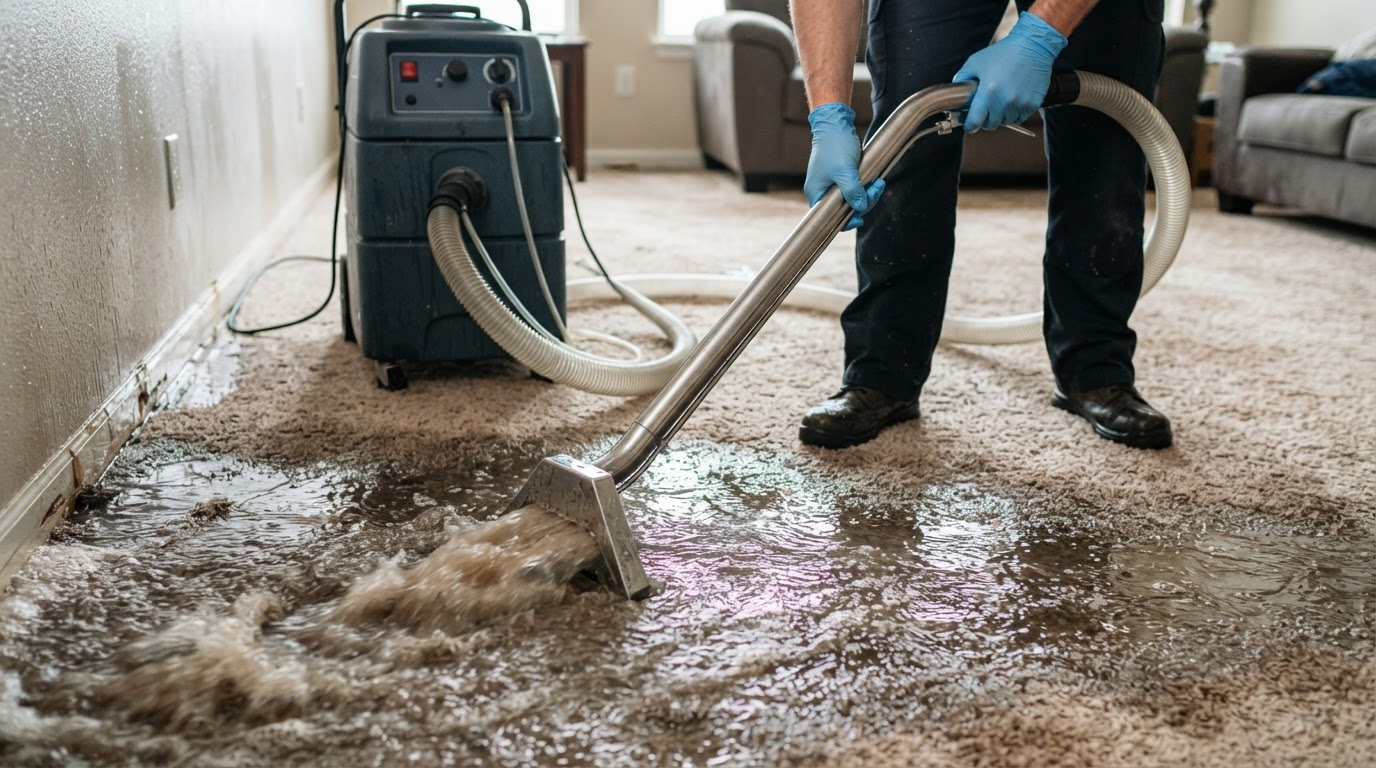
Immediate removal of standing and pooled water from flooded rooms, saturated carpet, and hard-surface flooring using portable extraction equipment designed to pull water out before it migrates into subfloors and wall cavities across New Braunfels properties.
Water extraction is the physical removal of standing, pooled, or trapped water from a property using pumps and specialized extraction tools. It is the first and most urgent step after a water loss because every hour water sits against building materials, more of it absorbs into flooring, drywall, and framing. Extraction is not the same as drying — it removes the bulk water so that structural drying can then address the moisture that remains inside materials.
Why Immediate Water Removal Matters
When water pools in a New Braunfels home or business, it does not wait. It flows under baseboards, seeps beneath flooring into the subfloor and padding, and wicks upward into drywall through capillary action. The longer standing water remains, the deeper it penetrates into porous assemblies — and the longer and more difficult the drying phase becomes. Removing the bulk water quickly is the single most effective way to limit the scope of a loss.
Extraction is also far more efficient than evaporation alone. Physically pulling water out of carpet and padding removes gallons that would otherwise take days to evaporate, which means drying equipment runs for less time and materials face less prolonged saturation. This is why professional extraction uses weighted tools that compress carpet and padding to force water out, rather than relying on towels or a shop vacuum.
It is important to understand the distinction: water extraction removes excess or standing water; structural drying addresses the residual moisture that remains inside materials after extraction. A room that has been fully extracted still needs drying, because moisture trapped in drywall, subfloor, and framing cannot be pumped out — it must be evaporated and dehumidified.
Is water extraction the same as water damage restoration?
No. Water extraction is one stage within the larger water damage restoration process. Extraction physically removes standing and pooled water; restoration also includes moisture detection, structural drying, material evaluation, and repair planning. A property that has been extracted is not yet dry — residual moisture remains inside porous materials and must be addressed with controlled drying before restoration is complete.
Call now to check immediate availability for emergency water removal & water extraction in new braunfels.
Call 830-356-3743Where Standing Water Hides After a Loss
Visible puddles are only part of the problem. After a leak or flood in a New Braunfels property, water travels into concealed spaces where it cannot be reached with a standard vacuum. These are the areas that require targeted extraction and follow-up drying.
Carpet & Padding
Carpet acts like a sponge and the padding beneath it holds even more water. Weighted extraction tools compress both layers to pull water out before it soaks the subfloor below.
Beneath Hard Flooring
Water seeps under laminate, engineered wood, and tile through seams and gaps. Once beneath, it saturates the underlayment and subfloor, where it cannot evaporate without intervention.
Behind Baseboards
Standing water flows behind baseboards and into the gap between the wall and floor, wicking up into drywall and down into the bottom plate of the wall framing.
Wall Cavities
Water enters wall cavities through openings around plumbing and electrical lines. Once inside, it contacts insulation and wood studs that hold moisture far longer than the wall surface.
Subfloor & Concrete Slab
Plywood, OSB, and concrete all absorb water. A saturated subfloor can delaminate or warp, and concrete holds moisture that can re-wet finished flooring installed above it.
Cabinet Toe Kicks
Water pools in the recessed toe-kick space beneath kitchen and vanity cabinets, where it sits against the cabinet base and the wall behind, often going unnoticed.
A common mistake is assuming a room is dry once the visible water is gone. Water beneath flooring and behind baseboards continues to migrate for hours after extraction, which is why moisture detection follows extraction to confirm where residual water remains before drying equipment is placed.
The Emergency Water Extraction Process
Extraction follows a priority sequence: stabilize safety, remove the bulk water, then prepare the structure for drying. The tools and methods adapt to the flooring type and how deeply water has penetrated.
1. Safety & Source Check
Before extraction, electrical hazards are addressed and the water source is confirmed stopped. The water category — clean, gray, or contaminated — is identified because it changes handling and safety requirements.
2. Bulk Water Removal
Submersible pumps or high-volume extractors remove deep standing water from the floor. This stage handles the water that can be pumped or vacuumed quickly before it absorbs further.
3. Carpet & Padding Extraction
Weighted drag wands and compression tools press water out of carpet and padding. In some cases padding is removed once it is clear it cannot be dried, to allow the subfloor beneath to dry.
4. Hard Surface & Crevice Extraction
Specialty tools pull water from beneath laminate and tile edges, cabinet toe-kicks, and along baseboards where pooled water hides and cannot reach by gravity alone.
5. Moisture Detection Sweep
After visible water is gone, moisture meters and thermal imaging confirm what remains trapped in subfloors, walls, and cavities. This determines where drying equipment is placed.
6. Transition to Structural Drying
With bulk water removed, air movers and dehumidifiers are positioned to evaporate residual moisture. Extraction is complete; drying now takes over to bring materials to dry baseline.
Extraction Is the Start — Drying Finishes the Job
Many New Braunfels property owners are relieved when the standing water is finally gone, but extraction alone does not mean the structure is dry. Moisture that has already absorbed into drywall, wood framing, subflooring, and insulation cannot be extracted — it must be evaporated through controlled air movement and removed from the air with dehumidification. Skipping this stage is the most common reason water damage returns as warped flooring, musty odors, or hidden microbial growth weeks later.
The relationship is straightforward: the faster and more thoroughly water is extracted, the shorter the drying phase. But drying is always required after extraction, because porous materials hold moisture that no pump can reach. A proper project includes both stages, with moisture monitoring confirming the structure has reached an acceptable dry baseline before equipment is removed.
Because extraction and drying are distinct but connected, this page links to the services that complete the process. A large flood may also require dedicated flood cleanup, and a plumbing source may need burst pipe cleanup to address the underlying failure.
Request water removal assistance for your New Braunfels property.
Emergency Water Removal FAQs
Direct answers about how standing water is removed, what extraction can and cannot reach, and why drying still follows.
How is standing water removed?
Standing water is removed using submersible pumps for deeper water and portable high-volume extractors for shallow pooling. Weighted extraction wands compress carpet and padding to force water out, while specialty crevice tools reach beneath hard flooring and cabinets. The method depends on water depth, flooring type, and how far water has migrated into concealed spaces.
What is water extraction?
Water extraction is the physical removal of standing, pooled, or trapped water from a property using pumps and specialized vacuum tools. It targets water that can be pulled out directly, as opposed to moisture absorbed inside materials, which must be evaporated through drying. Extraction is the urgent first step that limits how deeply water penetrates building assemblies.
How quickly should water be extracted?
Water should be extracted as soon as it is safe to do so. Water begins absorbing into flooring, drywall, and framing within minutes, and porous materials saturate over hours. The sooner bulk water is removed, the less moisture penetrates into concealed assemblies and the shorter the drying phase. Contact the team as soon as possible after discovering standing water.
Can water be extracted from carpet?
Yes. Carpet and its padding hold large volumes of water, and weighted extraction tools are designed specifically to compress both layers and pull water out. In many cases the padding is removed after extraction because it cannot be effectively dried, which also exposes the subfloor beneath for faster drying. Carpet itself can often be dried and reinstalled if the water source was clean.
What happens after standing water is removed?
After extraction, the structure still contains residual moisture inside drywall, subflooring, framing, and insulation that no pump can reach. Moisture detection confirms where that water remains, and then air movers and dehumidifiers are placed to evaporate it. This structural drying phase continues until moisture readings show affected materials have returned to an acceptable dry baseline.
Can water remain beneath flooring after extraction?
Yes. Water beneath laminate, tile, and engineered wood — in the underlayment and subfloor — often cannot be fully reached by extraction tools. Some flooring may need to be lifted or removed to access and dry the layers below. Moisture meters confirm whether water remains trapped beneath hard flooring before drying is considered complete.
Does a room still need drying after the visible water is gone?
Always. Visible water is only the surface portion of the loss. Moisture absorbed into drywall, baseboards, subfloor, and wall cavities remains after extraction and must be evaporated through structural drying. A room that looks dry can still hold enough moisture to cause secondary damage if drying is skipped.
Can water be extracted from a hardwood floor?
Surface water on hardwood can be extracted, but hardwood also absorbs moisture into its grain, causing cupping or crowning. Specialty drying mats that draw moisture out of the wood are often used after extraction. Severely cupped boards may need evaluation for whether they can be refinished or require replacement once dry.
Standing Water in Your New Braunfels Property?
Call now to check immediate availability for emergency water extraction. The faster bulk water is removed, the less moisture penetrates into your flooring, walls, and subfloor.
New Braunfels Water Damage Restoration
830-356-3743