Structural Drying & Dehumidification in New Braunfels
Scientific structural drying using high-velocity air movers and low-grain refrigerant dehumidifiers to evaporate and remove moisture trapped inside drywall, framing, subfloors, and wall cavities across New Braunfels properties.
Structural drying is the controlled process of reducing moisture in building materials after unwanted water has been removed. It uses air movement to evaporate moisture out of porous materials and dehumidification to pull that evaporated moisture out of the air, so the structure dries rather than simply circulating humid air. Drying is distinct from extraction: extraction removes standing water, while structural drying addresses the moisture that has absorbed into materials and cannot be pumped out.
Why Extraction Alone Is Not Enough
After water is extracted from a New Braunfels property, the structure is not dry. Porous building materials — drywall, wood framing, insulation, carpet padding, and the subfloor — absorb water during the loss and hold it inside their structure. This bound moisture cannot be removed by a pump or vacuum; it must be evaporated out of the material and then removed from the air. That is what structural drying accomplishes.
Drying works on a simple principle: air movement across a wet surface causes evaporation, and a dehumidifier removes the moisture that evaporates into the air. Without dehumidification, evaporated moisture simply re-absorbs into other materials or raises indoor humidity, and the structure never truly dries. The two work together — evaporation moves moisture out of materials, and dehumidification captures it so it leaves the building.
Not all materials dry at the same rate. Open wall surfaces dry faster than sealed wall cavities. Dense hardwood dries more slowly than carpet. A concrete subfloor releases moisture gradually over days. Drying strategy depends on the materials involved, the moisture level, the water source, and indoor conditions like temperature and humidity. This is why drying is monitored and adjusted, not just set up and left.
How is structural drying different from water extraction?
Water extraction physically removes standing and pooled water from surfaces and flooring using pumps and vacuums. Structural drying removes the moisture that has absorbed into porous building materials — drywall, framing, subfloor, and insulation — which no pump can reach. Extraction handles the water you can see; drying handles the moisture trapped inside the materials you cannot see. Both stages are required for complete water damage restoration.
Call now to check immediate availability for structural drying & dehumidification in new braunfels.
Call 830-356-3743Materials, Cavities & the Science of Drying
Structural drying targets specific materials and concealed spaces where moisture hides after extraction. Each dries at a different rate and requires a different approach to airflow and dehumidification.
Drywall & Wall Cavities
Drywall releases moisture slowly, and the wall cavity behind it holds humidity against insulation and studs. Cavity access — baseboard removal, weep holes, or flood cuts — introduces airflow so the inside dries, not just the surface.
Wood Framing & Studs
Wood studs absorb moisture and dry more slowly than drywall. Saturated framing can swell and, over time, is susceptible to warping and microbial activity if not dried to an acceptable moisture content.
Subfloor & Concrete
Plywood, OSB, and concrete subfloors hold moisture beneath finished flooring. Concrete is porous and releases moisture slowly. Subfloors must be confirmed dry before new flooring is installed or it will fail.
Hardwood Flooring
Hardwood absorbs moisture into its grain, causing cupping or crowning. Specialty drying mats draw moisture out of the wood over days. Severely cupped boards are evaluated for refinishing or replacement once dry.
Insulation
Fiberglass and cellulose insulation hold water and lose effectiveness when saturated. Wet insulation is evaluated for drying versus removal — in wall cavities it is often removed so framing can dry, then replaced.
Indoor Humidity
As materials dry, humidity rises inside the structure. Dehumidifiers capture that moisture so it does not re-absorb into dry materials. Controlling indoor humidity is what makes drying actually progress.
The key indicator of drying progress is not appearance — it is measured moisture content. Moisture meters track readings in affected materials across visits, and drying continues until those readings return to an acceptable baseline for each material type. A room that looks and feels dry can still hold moisture inside assemblies that only meters can detect.
The Structural Drying Process
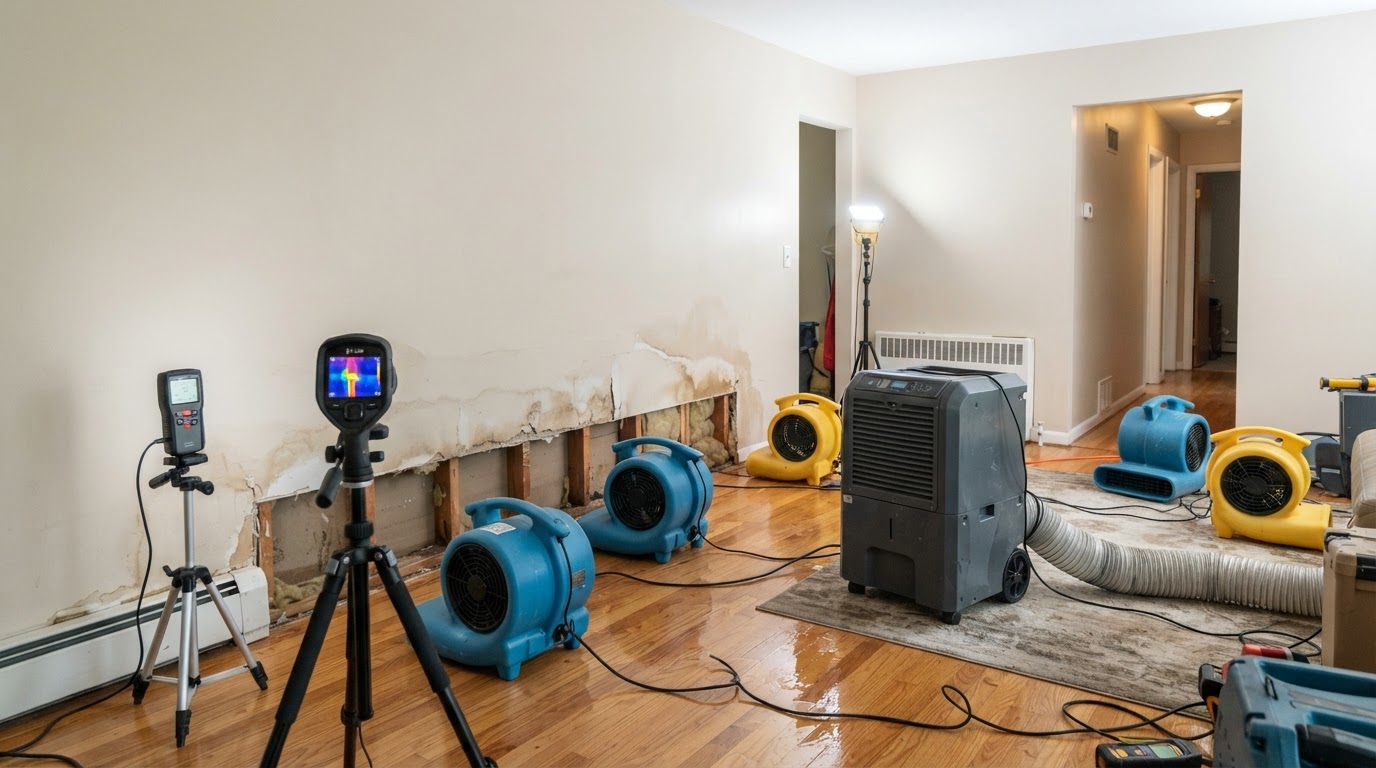
Structural drying follows a scientific sequence: map the moisture, set up evaporation and dehumidification, then monitor and adjust until materials reach dry baseline. Equipment placement is driven by the moisture map, not guesswork.
1. Moisture Mapping & Baseline
Moisture meters and thermal imaging map every wet assembly and record baseline readings. This establishes what needs drying and provides the benchmark readings used to confirm completion later.
2. Cavity Access Preparation
Where moisture is sealed inside wall cavities, baseboards are removed and weep holes or flood cuts introduce airflow. Closed cavities cannot dry without access, so the structure is opened strategically.
3. Air Mover Placement
High-velocity air movers are positioned to create continuous evaporation across wet surfaces and into cavities. Placement targets the mapped wet assemblies — walls, subfloors, and ceilings — not just open room space.
4. Dehumidification Setup
Low-grain refrigerant dehumidifiers capture the moisture evaporated into the air. Proper dehumidification capacity keeps indoor humidity low enough that moisture continues moving out of materials rather than re-absorbing.
5. Monitoring & Adjustment
Moisture readings are taken across visits and equipment is repositioned as some areas dry faster than others. Drying is an active, monitored process — not a set-and-forget setup — until all materials reach baseline.
6. Dry Standard Verification
Drying is complete only when moisture readings confirm affected materials have returned to an acceptable dry baseline. Equipment is removed once verification confirms the structure is dry, and a restoration plan outlines any remaining repairs.
Why Professional Drying Matters & Related Services
The risk of incomplete drying is secondary damage. Moisture left inside wall cavities, subfloors, and framing does not simply evaporate on its own — it lingers, weakening materials over time and creating conditions favorable to microbial growth. Extended moisture exposure increases that potential, which is one reason prompt, thorough drying matters. A surface that feels dry can still hold enough moisture inside to cause problems weeks later.
Professional drying also prevents the common mistake of circulating humid air without removing moisture. Fans alone raise humidity; without dehumidification, that moisture re-absorbs into dry materials and the structure never reaches a true dry standard. The combination of correctly placed air movement and properly sized dehumidification is what actually reduces moisture in building materials.
Because structural drying is the stage that completes most water damage projects, this page connects to the services it supports. Drying follows emergency water extraction, completes flood cleanup, and is the core of the broader water damage restoration process. The hidden moisture expertise on the roof, ceiling, and wall page also applies to drying concealed assemblies.
Request water removal assistance for your New Braunfels property.
Structural Drying & Dehumidification FAQs
Direct answers about how drying works, what dehumidifiers do, drying timelines, and how completion is verified.
What is structural drying?
Structural drying is the controlled process of reducing moisture in building materials after unwanted water has been removed. It uses air movement to evaporate moisture out of porous materials like drywall, framing, and subfloors, and dehumidification to capture that evaporated moisture from the air. The goal is to return affected materials to an acceptable dry baseline, not just to make surfaces look dry.
How is structural drying different from water extraction?
Water extraction physically removes standing and pooled water using pumps and vacuums. Structural drying removes moisture that has absorbed into porous building materials, which no pump can reach. Extraction handles visible water; drying handles trapped moisture inside drywall, framing, subfloor, and insulation. Both stages are required for complete restoration.
What does a dehumidifier do after water damage?
A dehumidifier removes the moisture that air movers evaporate out of wet materials. Without dehumidification, evaporated moisture stays in the air and re-absorbs into dry materials, so the structure never truly dries. The dehumidifier captures that moisture so it leaves the building, keeping indoor humidity low enough for drying to continue progressing.
How long does structural drying take?
Structural drying commonly takes several days, but the timeline depends on the materials affected, the moisture level, the water source, and indoor conditions. Dense materials like subfloors and concrete dry more slowly than open wall surfaces. Drying is complete only when moisture readings confirm affected materials have returned to an acceptable baseline — not when the room looks or feels dry.
How do you know when materials are dry?
Materials are confirmed dry using moisture meters that measure moisture content in each affected assembly — drywall, framing, subfloor, and flooring. Readings are tracked across visits and compared to the baseline established at the start. Drying is complete only when all affected materials reach an acceptable dry standard, because appearance alone is not a reliable indicator of trapped moisture.
Can drywall be dried?
Drywall can often be dried if the water source was clean, saturation is limited, and drying begins promptly. Cavity access — baseboard removal and weep holes — helps dry the inside of the wall, not just the surface. Drywall that absorbed contaminated water, shows crumbling or swelling, or stayed wet too long may need to be removed rather than dried.
Can wood flooring be dried?
Wood flooring can sometimes be dried using specialty drying mats that draw moisture out of the grain, but hardwood cups or crowns when it absorbs water. Cupped boards may be evaluated for refinishing once dry, and severely damaged boards may require replacement. The subfloor beneath must also be confirmed dry before any flooring is reinstalled.
Why does a room still need drying after standing water is gone?
Standing water is only the surface portion of the loss. Moisture absorbed into drywall, framing, subfloor, and insulation remains after extraction and cannot be pumped out — it must be evaporated and dehumidified. A room that looks dry can still hold enough moisture inside assemblies to cause secondary damage if structural drying is skipped.
Need Structural Drying in New Braunfels?
Call now to check immediate availability for moisture mapping, air movement, and dehumidification. Thorough drying prevents the hidden moisture that causes secondary damage after the visible water is gone.
New Braunfels Water Damage Restoration
830-356-3743