
Roof Leak, Ceiling, Wall & Hidden Water Damage Cleanup in New Braunfels
Moisture detection, water extraction, and structural drying for ceiling water stains, wet drywall, water inside walls, and hidden moisture from roof leaks and other concealed sources — addressing water that has traveled through wall cavities, insulation, and framing across New Braunfels properties.
Roof leak, ceiling, wall, and hidden water damage cleanup is the detection and drying of moisture that has entered a structure through a roof leak, a ceiling leak, or an upstairs source and migrated into drywall, wall cavities, insulation, and framing. This page focuses on the interior water damage resulting from roof leaks and other moisture sources — not roof repair. After the roof leak itself is repaired, cleanup focuses on finding the hidden moisture, extracting any standing water, and drying the affected assemblies before secondary damage develops.
Why Hidden Water Damage Is Harder to Find
Roof leaks and ceiling leaks are uniquely difficult because the water enters the structure in one place and travels to another. A roof leak above an attic can run along a rafter, drip onto the ceiling drywall of a room below, and wick into the wall cavity — appearing as a stain on the ceiling far from where the water actually entered. The visible stain is often the end of the water's path, not the beginning, which is why the full scope of the loss is usually larger than the visible damage suggests.
Water inside walls is even harder to detect. Moisture that enters a wall cavity travels down the studs, soaks the insulation, and pools at the bottom plate behind the baseboard. The drywall surface may look intact while the cavity behind it is saturated. Paint can mask moisture beneath it, and a wall that feels dry to the touch can hold enough water inside to cause warping, staining, and conditions favorable to microbial growth weeks later. This is why hidden moisture is detected with instruments, not by appearance.
Hidden water damage also comes from upstairs sources. A leak from an upstairs bathroom, a second-floor plumbing line, or an attic HVAC unit can travel down through the floor assembly and appear on the ceiling of the room below. By the time a ceiling stain is visible, water has commonly saturated the ceiling drywall, the insulation above it, and the framing between the two floors. The visible stain is the symptom; the moisture inside the assembly is the loss.
Can water remain hidden inside a wall after the surface looks dry?
Yes. Water can travel behind drywall, along framing, and beneath flooring even when the visible surface appears dry. Moisture that entered a wall cavity through a roof leak, a ceiling leak, or an upstairs source soaks the insulation and pools at the bottom plate, where it is hidden behind intact drywall and baseboards. A wall that feels dry to the touch can hold enough moisture inside to cause warping and microbial growth. Moisture meters and thermal imaging detect that hidden moisture, which is why detection — not appearance — defines the real scope of the loss.
Call now to check immediate availability for roof leak, ceiling, wall & hidden water damage cleanup in new braunfels.
Call 830-356-3743Where Hidden Water Hides in New Braunfels Homes
Hidden water damage follows paths that visual inspection misses. These are the concealed assemblies and materials most commonly affected when water enters through a roof, ceiling, or wall in a New Braunfels property.
Ceiling Drywall & Stains
A ceiling stain marks where water pooled above the drywall and soaked through. The insulation and framing above the stain hold moisture that the surface stain does not reveal, and the ceiling cavity requires its own drying.
Wall Cavities & Studs
Water inside a wall travels down the studs and soaks the insulation, pooling at the bottom plate behind the baseboard. The drywall surface can look intact while the cavity behind it is saturated and hidden from view.
Wet Insulation
Fiberglass and cellulose insulation hold water and lose effectiveness when saturated. Wet insulation inside a ceiling or wall cavity stays damp long after the surface dries and is often removed so the framing can dry, then replaced.
Moisture Beneath Paint
Paint can seal moisture inside drywall. A wall that looks dry can hold water beneath the paint film, where it causes bubbling, blistering, or staining over time. Moisture meters detect trapped moisture that the painted surface hides.
Attic Framing & Sheathing
A roof leak saturates attic rafters, roof sheathing, and the insulation between them. Wet framing in the attic dries slowly and is susceptible to warping and microbial activity if not dried and evaluated.
Flooring Below Wall Leaks
Water that travels down a wall reaches the subfloor and flooring at the base of the wall. The flooring beneath a wall leak — often hidden behind baseboards — can be saturated even when the rest of the floor looks dry.
The defining feature of hidden water damage is that the visible stain or surface mark is the end of the water's path, not the full scope. Water entered somewhere, traveled through assemblies, and surfaced where it pooled. Moisture meters and thermal imaging trace that path backward from the visible sign to map the full boundary of affected materials before drying equipment is placed.
The Hidden Water Damage Detection & Drying Process
Cleanup of hidden water damage follows a detection-first sequence: find the moisture, open the affected assemblies, extract any standing water, then dry the concealed cavities where water traveled.
1. Moisture Mapping & Source Tracing
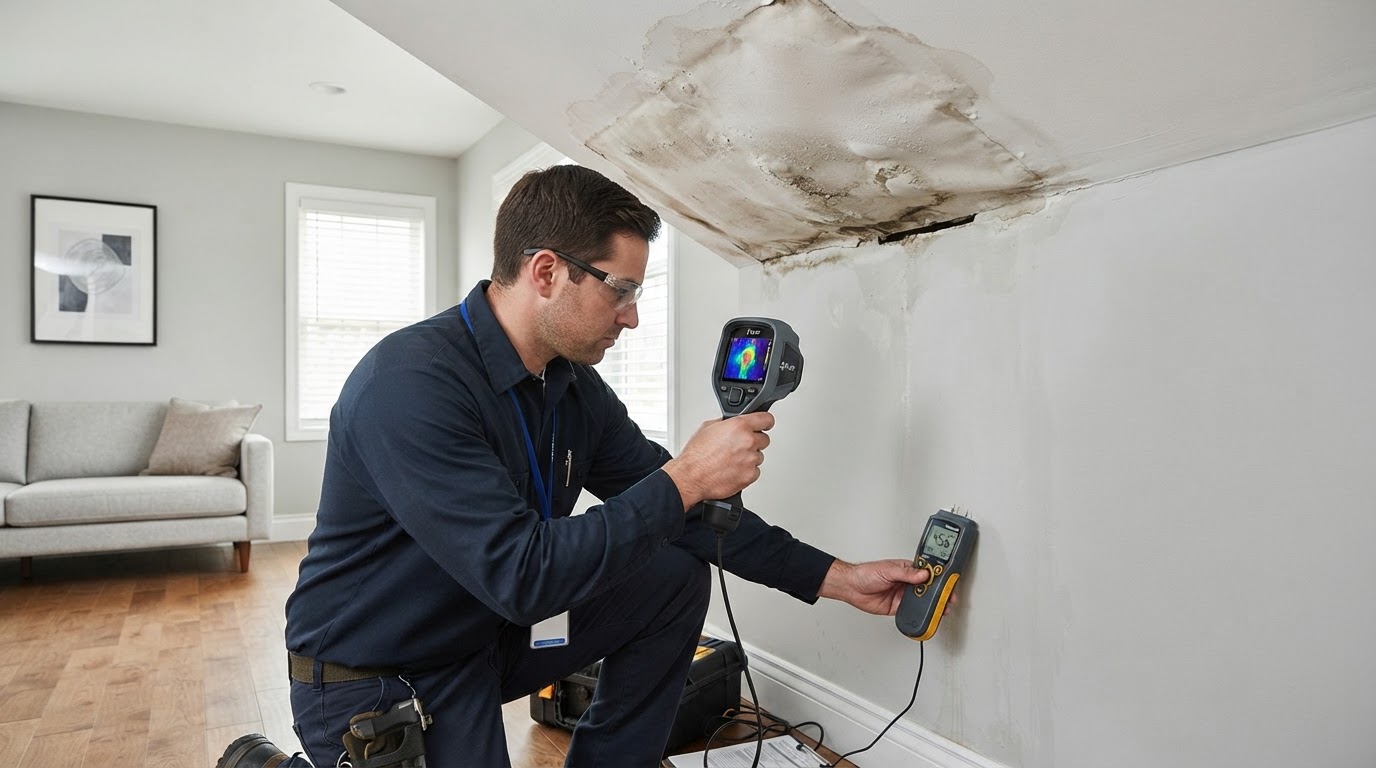
Moisture meters and thermal imaging trace the path water traveled from the roof entry point or ceiling stain, mapping wet drywall, insulation, framing, and subfloor. This defines the real scope of the loss, which is usually larger than the visible stain.
2. Affected Assembly Evaluation
Ceiling drywall, wall cavities, insulation, and framing are evaluated for drying versus removal. Saturated insulation is identified for removal so the framing can dry, and wet ceiling sections are assessed for whether they can be dried or must be opened.
3. Cavity Access & Water Extraction
Where moisture is sealed inside a wall or ceiling cavity, access is created by removing baseboards, opening wet ceiling sections, or cutting weep holes. Any standing water inside the cavity is extracted before airflow is introduced.
4. Structural Drying
Air movers and dehumidifiers dry the opened wall cavities, ceiling cavity, and subfloor where water migrated. Equipment targets the concealed assemblies — inside the wall, above the ceiling, and beneath the baseboards — not just the visible surfaces.
5. Moisture Monitoring
Moisture readings are tracked across visits until the framing, drywall, and subfloor return to an acceptable dry baseline. Drying is an active, monitored process, because hidden moisture inside sealed cavities dries more slowly than open surfaces.
6. Restoration Planning
Once drying is verified, a restoration plan outlines insulation replacement, drywall repair, ceiling texture, paint, and any trim work needed to finish recovery. The roof leak itself is repaired separately by a roofing contractor.
Why Thorough Drying of Hidden Moisture Matters
The ceiling stain is the easy part of a roof leak loss. The harder problem is the moisture that has traveled through the wall cavity, soaked the insulation, and pooled at the bottom plate — water that no fan pointed at a surface can reach. Without opening the affected assemblies and drying the concealed cavities, that residual moisture stays inside the structure and causes warped framing, stained drywall, and conditions favorable to microbial growth in the weeks after the visible water appeared gone. A wall or ceiling that looks dry can still hold enough moisture inside to cause secondary damage.
Hidden moisture also dries more slowly than surface moisture because it is trapped inside sealed assemblies. Insulation holds water against framing, and closed wall cavities limit airflow. This is why cavity access — removing baseboards, opening wet ceiling sections, creating weep holes — is part of drying hidden water damage, not just setting up fans in the room. Drying time depends on how far the moisture traveled, which materials are wet, and how long the leak ran before it was found. The structure is considered dry only when readings confirm affected materials have returned to an acceptable baseline.
Because roof, ceiling, and wall water damage often overlaps with storm and plumbing sources, this page connects to related services. Storm and heavy rain water damage restoration addresses weather-related intrusion, structural drying completes the concealed cavity drying, and plumbing leak cleanup covers supply line failures that also cause hidden wall moisture.
Request water removal assistance for your New Braunfels property.
Roof Leak, Ceiling & Hidden Water Damage FAQs
Direct answers about hidden moisture, ceiling stains, water inside walls, and how the structure is dried after a roof leak in New Braunfels.
How do I know if there is water inside a wall?
Water inside a wall is detected with moisture meters and thermal imaging, not by appearance. Signs that hidden moisture may be present include soft or discolored drywall, bubbling or blistering paint, a damp or musty smell, baseboards that are swollen or pulling away, and staining at the base of a wall. Because water can travel behind intact drywall, the surface can look dry while the cavity behind it is saturated.
Can wet drywall dry on its own?
Drywall exposed to a limited amount of clean water and dried promptly can sometimes be saved, but closed wall cavities limit airflow and dry slowly on their own. Drying is faster and more complete when the cavity is opened — baseboards removed, weep holes cut — so air movers can reach the moisture inside. Drywall that stayed wet too long, shows swelling or crumbling, or contacted contaminated water may need to be removed rather than dried.
What causes ceiling water stains?
Ceiling stains are caused by water pooling above the drywall and soaking through to the visible surface. Common sources include a roof leak, an attic HVAC condensate overflow, an upstairs plumbing line failure, or a leak from an upstairs bathroom. The stain marks where water pooled, but the moisture above the drywall — in the insulation and framing — is the larger concern and requires its own drying.
Can a roof leak cause damage far from the roof entry point?
Yes. Water that enters through a roof leak can run along a rafter or roof sheathing and drip onto the ceiling drywall of a room below, appearing as a stain far from where the water actually entered the structure. The visible stain is the end of the water's path, not the beginning. Moisture mapping traces that path backward to find the full scope of affected materials.
How is hidden moisture detected?
Hidden moisture is detected with moisture meters that measure moisture content inside drywall, framing, and subfloor, and thermal imaging that shows temperature differences caused by wet materials. These instruments find water behind intact drywall, above ceiling drywall, and inside wall cavities that a visual inspection misses. Detection — not appearance — defines the real scope of a hidden water loss.
Can insulation stay wet after a ceiling leak?
Insulation holds water and stays damp long after the ceiling surface dries. Wet fiberglass and cellulose lose effectiveness and can hold moisture against the framing, which dries more slowly as a result. Saturated insulation is often removed so the framing and cavity can dry, then replaced once the structure reaches an acceptable dry baseline.
Does water behind drywall need structural drying?
Yes. Water that has entered a wall cavity soaks the insulation and studs and cannot be removed by a pump or fan pointed at the surface. The cavity must be opened — baseboards removed, weep holes cut, or wet sections opened — so air movers and dehumidifiers can dry the concealed assemblies. Without cavity drying, hidden moisture causes warped framing, stained drywall, and conditions favorable to microbial growth.
What should happen after the roof leak itself has been repaired?
After the roof leak is repaired by a roofing contractor, the interior water damage still needs to be addressed. The hidden moisture is mapped with detection tools, wet insulation and drywall are evaluated for removal, the wall and ceiling cavities are opened for airflow, and structural drying dries the framing, drywall, and subfloor to an acceptable baseline. A restoration plan then outlines insulation replacement, drywall repair, and finish work to complete recovery.
Hidden Water Damage in Your New Braunfels Home?
Call now to check immediate availability for moisture detection, ceiling and wall cavity drying, and hidden water damage cleanup across New Braunfels and Central Texas properties.
New Braunfels Water Damage Restoration
830-356-3743