
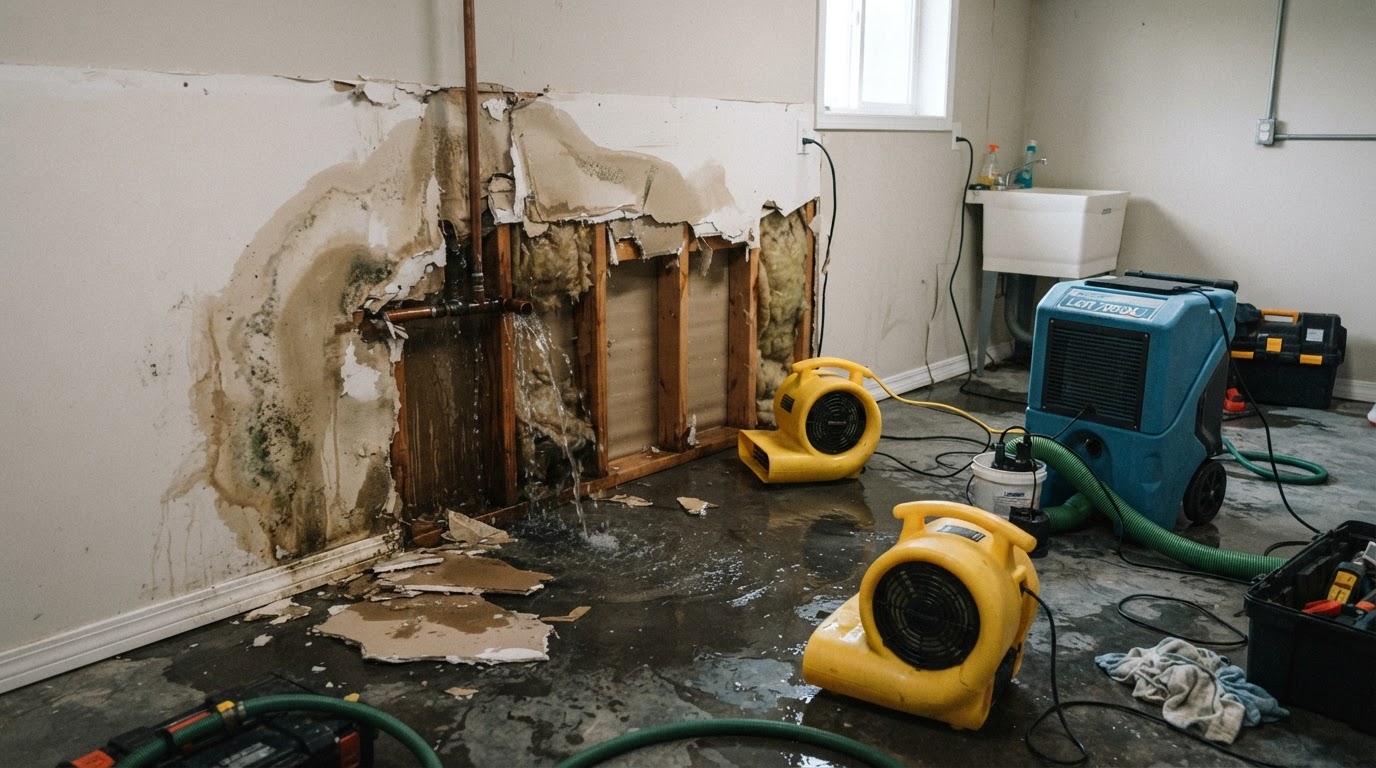
Burst Pipe & Plumbing Leak Cleanup in New Braunfels
Rapid water extraction and structural drying for pressurized pipe bursts, supply line failures, concealed plumbing leaks, and upstairs pipe leaks that send water through ceilings and wall cavities across New Braunfels properties.
Burst pipe and plumbing leak cleanup is the removal of water released by a failed pipe or supply line, followed by moisture detection and structural drying of the materials it contacted. Stopping the plumbing source and drying the resulting property damage are separate issues — a plumber stops the leak, and the restoration team handles the water it released. After the plumbing source has been stopped or repaired, the focus turns to extracting water and drying drywall, flooring, and framing before secondary damage develops.
How Plumbing Leaks Damage a Property
Pressurized plumbing failures release water fast. A burst supply line under a sink or behind a toilet can push dozens of gallons per minute into a New Braunfels home, spreading across floors and into wall cavities before the water is shut off. Because the water is under pressure, it travels farther and penetrates deeper than a slow leak — often reaching adjacent rooms, the subfloor, and the ceiling of the level below.
Concealed leaks are a different but equally serious problem. A slow leak inside a wall, from a pinhole in copper or a failed fitting, may run for days or weeks before it is discovered. By then, water has saturated the insulation, studs, and the back of the drywall, and the damage is far more extensive than the visible stain suggests. These hidden leaks are why moisture detection is essential even when the wall looks only slightly discolored.
Upstairs plumbing failures add another layer: water follows gravity down through floor assemblies, saturating the subfloor, dripping into the ceiling below, and running along the top plate of lower-level walls. A single upstairs pipe leak can damage the bathroom floor, the ceiling of the room below, and the walls of both — all from one failure point.
What should you do after a pipe bursts?
After a pipe bursts, immediately shut off the main water supply valve to stop the flow, then turn off electricity to affected areas at the breaker if water has reached outlets or wiring. Move belongings out of the water's path if safe, contain the spread with towels at doorways, and contact a plumber to repair the pipe plus a restoration team to extract water and dry the structure. The faster the source is stopped and water removed, the more materials can be saved.
Call now to check immediate availability for burst pipe & plumbing leak cleanup in new braunfels.
Call 830-356-3743Pipe Failure Points & Affected Materials
Plumbing leaks originate from several common failure points, and the water they release affects a predictable set of materials. These are the sources and assemblies most often involved in New Braunfels burst pipe cleanup.
Supply Line Failures
Braided, rubber, and plastic supply lines to toilets, sinks, washing machines, and refrigerators are a leading cause of sudden bursts. These pressurized lines release water rapidly until the valve is closed.
Pipe & Fitting Failures
Copper pinholes, frozen pipe splits, and failed solder joints or fittings leak inside walls and ceilings. Concealed failures often run unnoticed until a stain or sag appears.
Wet Drywall & Ceilings
Drywall absorbs water from leaks above and behind it, staining, sagging, and weakening. Ceiling drywall from an upstairs leak can bulge and hold pooled water above it before breaking through.
Wall Cavities & Insulation
Water from a concealed pipe leak enters the wall cavity, saturating insulation and wood studs. The cavity holds moisture far longer than the wall surface and cannot dry without airflow access.
Flooring & Subfloor
Water from a burst pipe flows across and beneath flooring into the subfloor. Hardwood cups, laminate delaminates, and the plywood or OSB beneath swells if not dried promptly.
Under-Sink Cabinets
Leaks under kitchen and bathroom vanities saturate the cabinet base and the wall behind, often going unnoticed because the cabinet hides the damage until swelling or odor appears.
Warning signs of a concealed plumbing leak include unexplained water stains on ceilings or walls, a musty odor, the sound of running water when fixtures are off, unexpectedly high water bills, and warm or damp spots on flooring. Any of these warrant a moisture inspection to locate the source before structural damage worsens.
The Burst Pipe & Leak Cleanup Process
Cleanup begins after the plumbing source has been stopped or repaired. The process focuses on removing the released water and drying every assembly it reached — including the concealed spaces where plumbing leaks hide.
1. Source Confirmation & Safety
The team confirms the plumbing source has been stopped or repaired and addresses electrical hazards in wet areas. The water category is identified — most plumbing leaks are clean Category 1 water, which expands salvage options.
2. Moisture Mapping
Non-invasive moisture meters and thermal imaging trace where water traveled from the failure point — across flooring, into wall cavities, and down through ceilings — so the full extent is known before drying begins.
3. Water Extraction
Standing and pooled water from the burst is removed with extractors, and weighted tools pull water from carpet and flooring. Bulk removal shortens the drying phase significantly.
4. Cavity Access & Material Evaluation
Where water entered wall cavities, baseboards are removed and weep holes or flood cuts introduce airflow. Saturated drywall and insulation that cannot be dried are identified for removal.
5. Structural Drying
Air movers and dehumidifiers target the wet assemblies — wall cavities, subfloors, and ceilings below upstairs leaks. Equipment placement is driven by the moisture map, not just visible wet spots.
6. Monitoring & Restoration Planning
Moisture is tracked across visits until framing, subfloor, and drywall reach dry baseline. A restoration plan then outlines repairs — drywall replacement, flooring, and trim — to complete recovery.
Why Thorough Drying Matters After a Plumbing Leak
A burst pipe releases water under pressure, which means it penetrates deeply and quickly into building assemblies. Even after the visible water is extracted, moisture remains inside wall cavities, subfloors, and the ceilings below upstairs leaks. That residual moisture is the real risk: it weakens drywall and framing over time and creates conditions favorable to microbial growth if left in place.
Concealed leaks are especially dangerous because the damage is already extensive by the time it is discovered. A slow leak inside a wall may have saturated insulation and studs for weeks, and simply drying the wall surface does not address the moisture trapped in the cavity. Opening the cavity — removing baseboards, drilling weep holes, or making a flood cut — is often necessary to introduce airflow and confirm the framing is actually dry.
Because plumbing leaks overlap with several specialties, this page connects to related services. Emergency water removal handles the extraction phase, structural drying completes the moisture removal, and the hidden-wall expertise on the roof, ceiling, and wall page applies to concealed leaks behind drywall.
Request water removal assistance for your New Braunfels property.
Burst Pipe & Plumbing Leak FAQs
Direct answers about pipe bursts, concealed leaks, water migration, and how plumbing repair and water damage cleanup fit together.
What should I do after a pipe bursts?
Shut off the main water supply valve immediately to stop the flow, then turn off electricity to wet areas at the breaker if water has reached outlets or wiring. Move belongings out of the water's path, contain spread at doorways, and contact a plumber to repair the pipe plus a restoration team to extract water and dry the structure. Fast action limits how deeply water penetrates materials.
Who removes water after a plumbing leak?
A water damage restoration team removes the water and dries the structure after a plumbing leak. A plumber stops and repairs the leak source, but drying the resulting property damage is a separate service. After the plumbing source has been stopped or repaired, the restoration team handles extraction, moisture detection, and structural drying of the affected materials.
Can a small plumbing leak damage drywall?
Yes. Even a slow concealed leak saturates drywall from behind, where it wicks into the paper facing and gypsum core. A small leak inside a wall can cause staining, swelling, and weakening of drywall across a larger area than the leak point itself, because water spreads laterally through the material and into insulation and studs.
How can water travel from an upstairs pipe leak?
Water from an upstairs plumbing leak follows gravity down through floor assemblies, saturating the subfloor and dripping into the ceiling of the room below. It can also run along the top plate of lower walls and into wall cavities, damaging the bathroom floor, the ceiling below, and the walls of both levels from a single failure point.
Can water remain under flooring after a plumbing leak?
Yes. Water from a burst pipe flows beneath hardwood, laminate, and tile into the underlayment and subfloor, where it cannot evaporate on its own. Moisture meters detect trapped water below the surface. Some flooring may need to be lifted to access and dry the layers beneath before drying is considered complete.
Does a plumber dry water-damaged materials?
No. A plumber stops and repairs the leak source, but drying water-damaged drywall, flooring, and framing is performed by a water damage restoration team. The two services are separate: plumbing repair addresses the cause, and restoration addresses the water the leak released. Both are typically needed after a burst pipe.
How long can a wall take to dry after a leak?
A wall commonly takes several days to dry after a plumbing leak, depending on the moisture level, insulation type, and whether the cavity has been opened for airflow. Closed wall cavities dry far more slowly than exposed surfaces, which is why baseboard removal and weep holes are used to introduce air. Moisture readings confirm the wall is dry, not appearance alone.
What happens after the leak source is repaired?
After the plumbing source is stopped or repaired, the restoration team extracts any standing water, maps the full extent of moisture, and dries the affected drywall, flooring, framing, and cavities. Once moisture readings confirm a dry baseline, a restoration plan outlines repairs such as drywall replacement, flooring, and trim to complete recovery.
Burst Pipe or Plumbing Leak in New Braunfels?
After the water is shut off, call now to check immediate availability for water extraction and structural drying. Fast removal limits how deeply plumbing leak water penetrates your walls, flooring, and ceilings.
New Braunfels Water Damage Restoration
830-356-3743