Hardwood Floor Water Damage & Drying in New Braunfels
Hardwood flooring in New Braunfels homes—whether solid oak, engineered plank, or exotic wood—is highly sensitive to water exposure. Appliance leaks, pipe bursts, or sink overflows can cause wood floor planks to absorb water, swelling at board edges and creating cupping, crowning, or subfloor buckling.
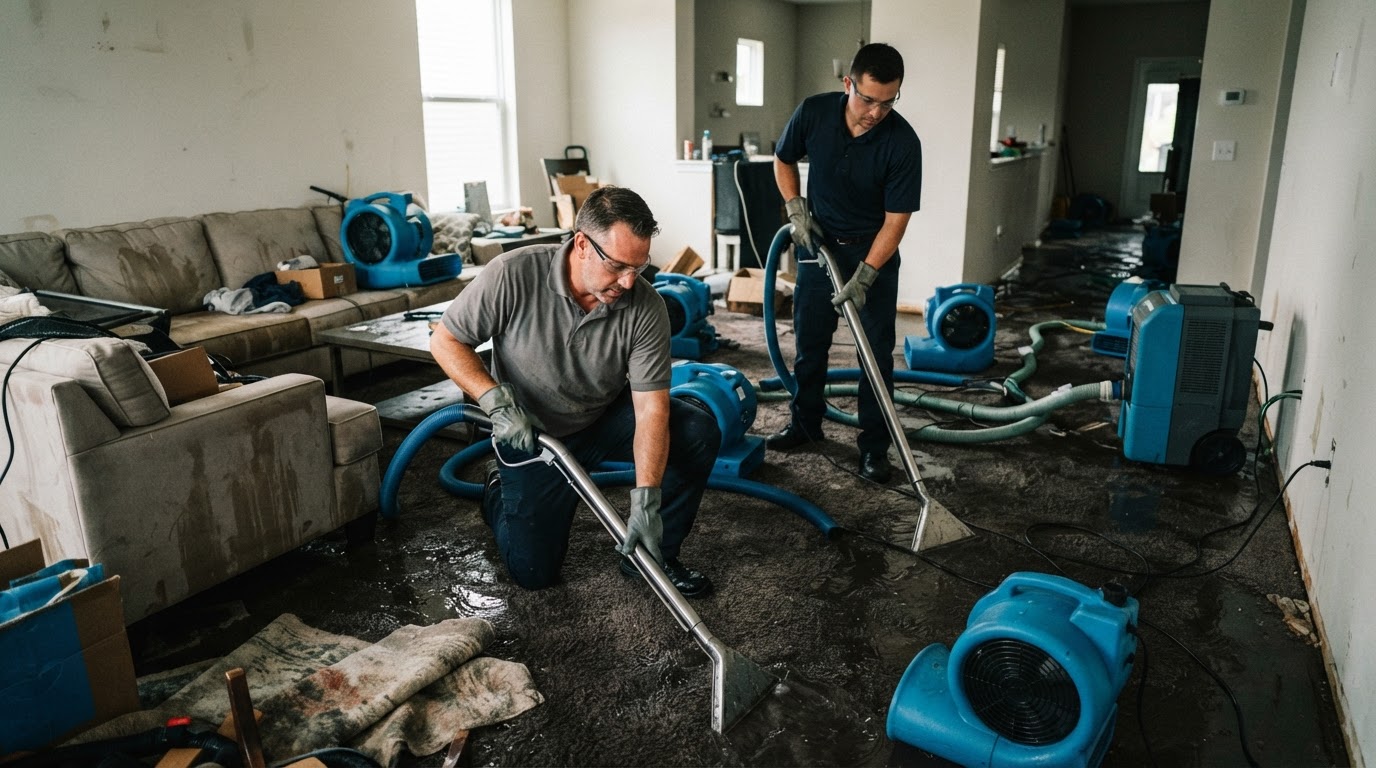
Hardwood floor water damage drying involves extracting standing surface water, deploying specialty floor mat drying systems that pull moisture out through wood tongue-and-groove joints, monitoring wood subfloor moisture levels, and using low-grain refrigerant dehumidification to restore wood planks back to baseline equilibrium moisture content.
Understanding Wood Floor Moisture Mechanics & Cupping
Wood is a natural hygroscopic material that expands when absorbing moisture and contracts as it dries. When water pools on a hardwood floor, liquid penetrates board seams, tongue-and-groove joints, and fastener holes, soaking into the underside of wood planks.
Because the bottom of the wood plank becomes wetter than the top finished surface, the bottom expands more, causing 'cupping'—a condition where plank edges rise higher than board centers.
If subfloor moisture is trapped beneath wood flooring without targeted extraction, planks continue expanding, crushing adjacent boards and causing 'crowning' or complete subfloor buckling. Immediate vacuum-panel drying rescues wood floors before permanent deformation occurs.
What should you do when water covers your hardwood floor?
Immediately wipe up visible surface water with towels or squeegees. Do not use high heat directly on wood boards, as rapid surface drying causes board splitting and checking. Shut off the plumbing leak source, avoid walking on cupped planks, and call our hardwood floor restoration team immediately to set up specialty floor vacuum drying mats.
Call now to check immediate availability for hardwood floor water damage & drying in new braunfels.
Call 830-356-3743Wood Floor Assemblies & Subfloor Elements Damaged by Leaks
Hardwood flooring restoration requires multi-layer moisture evaluation beneath finished planks.
Solid Wood Planks
Solid oak, maple, and pine boards absorb water from board undersides, causing edge cupping and seam swelling.
Engineered Wood Plies
Engineered hardwood layers absorb water between veneer plies, leading to ply delamination and surface checking.
Tongue & Groove Joints
Interlocking board joints trap water beneath finished top coatings, restricting natural surface evaporation.
Subfloor Underlayment Paper
Rosin paper or felt underlayment holds water directly between subfloor plywood and hardwood board bottoms.
Subfloor Plywood & OSB Slabs
Subfloors beneath hardwood absorb water, swelling at plywood seams and telegraphing ridges into planks above.
Perimeter Baseboards & Expansion Gaps
Wood floor expansion pushes perimeter planks tightly against baseboards, warping trim if boards cannot expand.
Our technicians use wood pin-meters and non-invasive capacitance meters to map moisture gradients across wood planks accurately.
Our Specialized Hardwood Floor Vacuum Drying Protocol
We use specialty floor drying technology designed specifically to save solid and engineered wood floors.
1. Wood Moisture Content Mapping
We map moisture content in wood planks, subfloors, and dry baseline reference areas using digital wood meters.
2. Surface Water Extraction
Soft rubber squeegee extraction tools pull standing water off wood board surfaces without scratching finishes.
3. Floor Mat Vacuum System Setup
Specialty negative-pressure floor mat panels are sealed onto cupped hardwood planks to draw water out through board seams.
4. LGR Dehumidification & Environment Control
Industrial low-grain refrigerant dehumidifiers lower room relative humidity, accelerating subfloor moisture evaporation.
5. Daily Wood Moisture Monitoring
We measure wood moisture content daily to track board flattening and prevent over-drying wood fibers.
6. Equilibrium Re-Flattening Clearance
Once wood planks and subfloors reach Equilibrium Moisture Content (EMC), floor mats are removed as boards re-flatten.
Why Specialty Hardwood Floor Vacuum Drying Is Necessary
Air movers blowing across the top of a cupped wood floor only dry the top finish, leaving the underside of the wood planks and subfloor soaked. This uneven drying causes permanent board cupping and finish cracking.
Specialty floor mat vacuum systems pull moisture out from underneath wood planks, allowing boards to contract evenly and re-flatten back onto subfloors, saving expensive hardwood floors from tear-out.
Request water removal assistance for your New Braunfels property.
Hardwood Floor Water Damage & Drying FAQs
Answers to common questions about cupped hardwood floors, vacuum floor mats, and wood floor saving feasibility.
Can cupped hardwood floors be saved after water damage?
Yes. If specialty floor mat vacuum drying begins within 24 to 48 hours of water exposure, cupped solid and engineered hardwood planks can often be dried and flattened back into place without replacement.
How do specialty floor mat vacuum systems dry hardwood floors?
Floor mats are sealed to the hardwood surface. Negative-pressure suction draws warm, dry air down through perimeter expansion gaps, under the subfloor, and up through board tongue-and-groove joints.
What is hardwood floor 'cupping' and 'crowning'?
Cupping occurs when board edges rise higher than the center because the plank underside is wetter than the top. Crowning happens if the top surface dries faster or boards are sanded while the underside is still wet.
Should cupped hardwood floors be sanded immediately after getting wet?
No. Never sand a cupped hardwood floor while boards are still wet underneath. Sanding cupped boards flattens top edges, but when the underside eventually dries, boards will crown and be permanently ruined.
How long does it take to dry out a water-damaged hardwood floor?
Hardwood floor vacuum panel drying typically takes 5 to 10 days of continuous dehumidification and negative-pressure extraction, depending on wood species and subfloor saturation.
Can engineered hardwood floors be dried and saved?
Engineered hardwood can be saved if water has not caused top veneer plies to delaminate or separate from core layers. Prompt vacuum drying gives the best chance of saving engineered planks.
Does homeowner insurance cover hardwood floor water damage drying?
Most homeowner policies cover sudden water damage from broken pipes or appliance leaks, including specialized hardwood floor vacuum drying costs.
Need Hardwood Floor Water Damage Drying in New Braunfels, TX?
Contact New Braunfels Water Damage Restoration now for immediate hardwood moisture testing, floor mat vacuum setup, and subfloor drying.
New Braunfels Water Damage Restoration
830-356-3743